

Dr Colum Nolan
Senior Consultant Spine & Neurosurgeon
MB, BCh, BAO, LRCPSI, MRCSI, FRCSI (Neurosurgery)
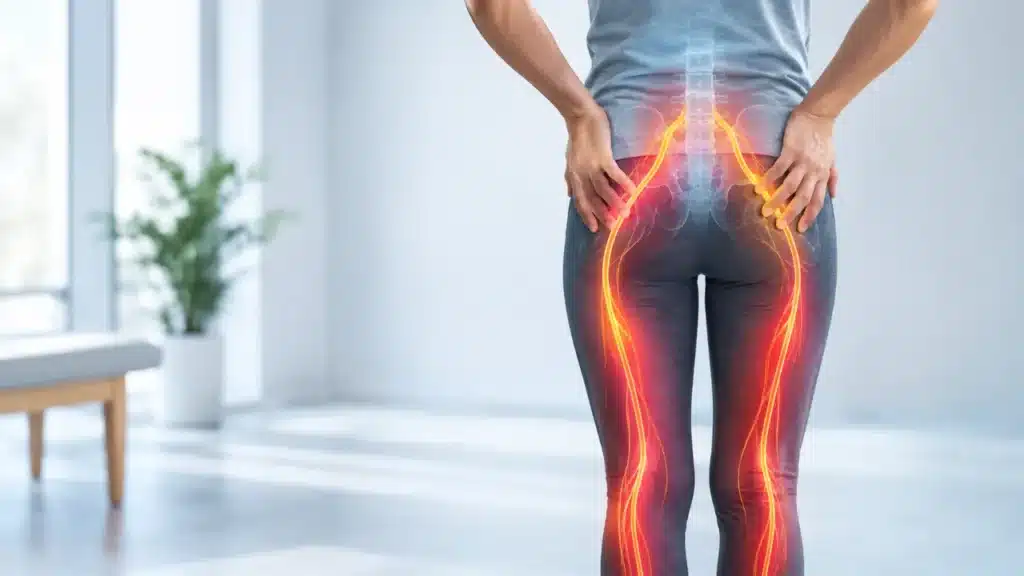
Sciatica is commonly associated with pain travelling from the lower back into one leg. When similar symptoms develop on both sides, it can be harder to understand what is happening, particularly if the pain affects each leg differently or changes over time.
Sciatica affecting both legs, also known as bilateral sciatica, may occur when nerve roots on either side of the lower spine become irritated or compressed. These nerve roots contribute to sensation and muscle function in the legs, which explains why their involvement can cause symptoms on both sides.
Bilateral sciatica does not necessarily affect both legs equally or indicate a more severe condition. However, the distribution and progression of symptoms can provide important clues about the underlying spinal problem, particularly when multiple nerve roots are involved.
What Causes Sciatica in Both Legs?
Bilateral sciatica can develop when a spinal condition affects nerve roots on both sides of the lower back. This may occur when a spinal condition reduces the space available for nerve roots or directly places pressure on them.
Some possible causes include:
- Central disc herniation: A herniated disc that extends towards the centre of the spinal canal may compress or irritate nerve roots on both sides, particularly if the displaced material is large enough to affect multiple nerves.
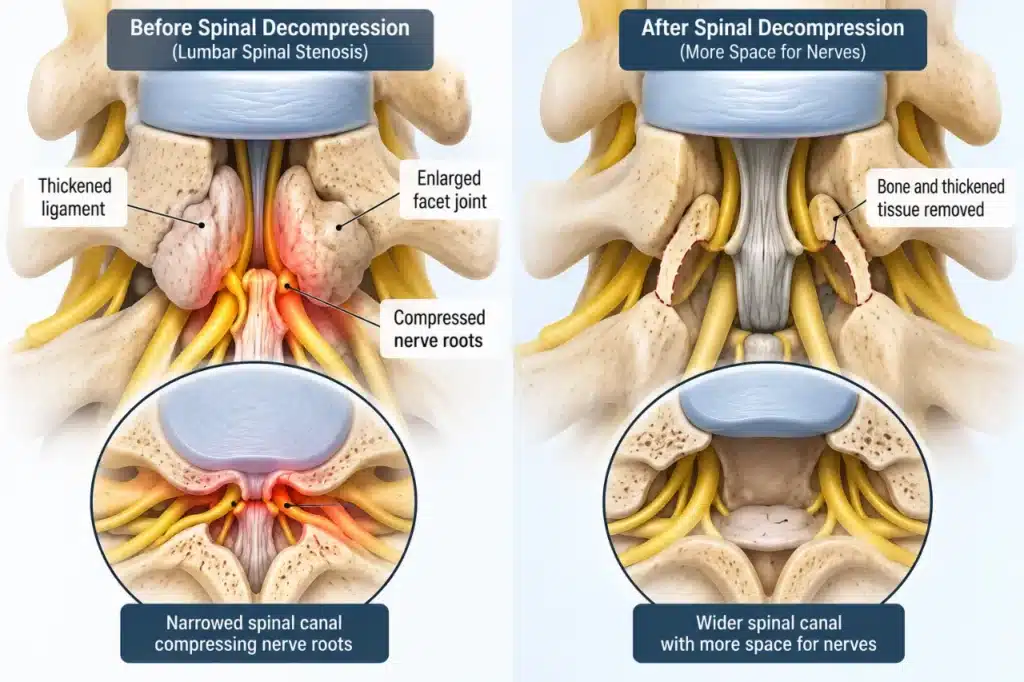
- Lumbar spinal stenosis: Narrowing of the spinal canal can reduce the space available for multiple nerve roots, potentially causing compression on both sides.
- Degenerative spinal changes: Age-related changes affecting the discs and spinal joints may contribute to narrowing around nerve structures. Conditions such as degenerative spondylolisthesis, where one vertebra slips forward relative to another, can also contribute to nerve compression.
However, pain in both legs is not always caused by sciatica. Other conditions affecting the nerves, blood vessels or musculoskeletal system may produce similar symptoms. Identifying the source of bilateral leg pain is therefore important before attributing it to a spinal condition.
Symptoms of Bilateral Sciatica
Sciatica symptoms in both legs can vary depending on which nerve roots are affected and the extent of nerve irritation or compression. Symptoms may occur simultaneously, alternate between legs or be more pronounced on one side.
Common symptoms include:
- Radiating leg pain: Sharp, burning or shooting pain extending from the lower back or buttocks into one or both legs. The pain may follow different paths on each side.
- Numbness or tingling: Altered sensation affecting parts of the buttocks, thighs, calves or feet, depending on the nerve roots involved.
- Muscle weakness: Difficulty performing certain movements, such as lifting the foot or pushing off when walking, if nerve function is affected.
- Changes in walking tolerance: Pain or discomfort in both legs that develops during standing or walking and improves with sitting or bending forward, particularly when lumbar spinal stenosis is involved.
Bilateral leg symptoms accompanied by new difficulty passing urine, loss of bladder or bowel control, numbness around the groin or saddle area, or rapidly worsening leg weakness require immediate medical assessment. These may be signs of cauda equina syndrome, a serious condition involving compression of nerve roots in the lower spinal canal that can cause permanent neurological impairment if treatment is delayed.
How Is Bilateral Sciatica Diagnosed?
Pain affecting both legs does not necessarily mean that multiple spinal nerves are compressed. Diagnosing bilateral sciatica involves assessing the pattern of symptoms, examining nerve function and determining whether the findings are consistent with irritation or compression of nerve roots in the lower spine.
Assessment typically includes:
- Medical history: Reviewing when symptoms began, whether both legs were affected from the outset and how pain or altered sensation changes with movement, standing or walking.
- Physical and neurological examination: Assessing muscle strength, reflexes and sensation in both legs to identify patterns that may suggest nerve root involvement.
- MRI scan: Examining the lumbar spine for disc herniation, spinal canal narrowing or other structural changes that may affect nerve roots. Imaging is considered based on the clinical findings and severity of symptoms.
- Additional investigations: Electromyography (EMG) and nerve conduction studies may be considered in selected cases when the source of symptoms remains uncertain or another nerve condition is suspected.
The examination findings are considered alongside any imaging results to determine whether a spinal abnormality explains the symptoms in both legs. This distinction is particularly important when MRI reveals several degenerative changes, as not every abnormality is necessarily responsible for the patient’s pain.
Treatment Options for Bilateral Sciatica
Treatment for bilateral sciatica depends on the underlying spinal condition, the severity of symptoms and whether nerve function is affected. Having symptoms in both legs does not automatically mean surgery is necessary. When symptoms are manageable and there is no progressive neurological impairment, non-surgical treatment is generally considered first.
Options may include:
- Medication: Pain-relieving or anti-inflammatory medication may help manage discomfort, depending on the patient’s condition.
- Physiotherapy: Guided exercises may help maintain mobility, strengthen supporting muscles and improve tolerance for everyday activities.
- Activity modification: Adjusting movements or activities that aggravate symptoms while avoiding prolonged bed rest.
- Epidural steroid injections: May be considered for selected patients with persistent nerve-related pain to help reduce inflammation and provide temporary relief.
Surgery may be considered if symptoms remain disabling despite appropriate non-surgical treatment. Progressive neurological deficits may warrant earlier intervention, while suspected cauda equina syndrome requires emergency assessment. If a herniated lumbar disc is causing the symptoms, minimally invasive lumbar discectomy and decompression may be considered to relieve pressure on the affected nerve roots. Whether surgery is suitable depends on the clinical findings and imaging.
Take the Next Step Towards Comfort in Both Legs With Dr Colum Nolan
Experiencing sciatica in one leg can already be troubling. When pain or other symptoms begin affecting both legs, it is understandable to become more concerned about what may be happening in your spine. Identifying the underlying cause is an important step towards determining the appropriate treatment.
At Oxford Spine & Neurosurgery Centre, Dr Colum Nolan assesses the pattern of symptoms alongside neurological examination and imaging findings to identify the source of nerve irritation or compression. His approach considers appropriate non-surgical treatment options where clinically suitable, with surgical intervention considered when necessary.
Arrange a consultation to investigate your bilateral sciatica symptoms and discuss the next steps towards managing your discomfort.
Frequently Asked Questions (FAQs) About Bilateral Sciatica
Can bilateral sciatica cause permanent nerve damage?
Persistent or severe nerve compression can sometimes lead to lasting neurological problems, particularly when significant weakness develops or treatment is delayed. However, bilateral sciatica does not automatically mean permanent nerve damage will occur. The risk is influenced by the severity and duration of nerve compression.
Can bilateral sciatica affect my ability to drive?
Yes. Pain, numbness or weakness in either leg may interfere with operating the pedals safely. Certain pain medications can also affect alertness or reaction time. Driving should be avoided if symptoms or medication impair vehicle control, and medical advice may be needed before resuming.
Does pregnancy affect treatment for bilateral sciatica?
Yes. Pregnancy may contribute to sciatica, and it can also affect which treatments are appropriate for bilateral symptoms. Certain pain medications and injections may not be suitable, while physiotherapy and activity modifications may need to account for the stage of pregnancy. Treatment decisions should consider maternal and foetal safety, with specialist input where needed.
Meet Our Doctor
Dr Colum Nolan
Senior Consultant Spine & Neurosurgeon
MB, BCh, BAO, LRCPSI, MRCSI, FRCSI (Neurosurgery)
Dr Colum Nolan is a senior consultant spine and neurosurgeon, as well as the Medical Director of Oxford Spine & Neurosurgery Centre. He undertook specialist neurosurgery training in Ireland and Australia, and later on completed a complex spine surgery fellowship at Addenbrooke’s Hospital in Cambridge, UK.
Dr Colum held key leadership roles including Director of the Spine and Spinal Disorders Programme at the National Neuroscience Institute (NNI), as well as the Head of Neurosurgery Service at Sengkang General Hospital.
With his depth of experience, Dr Colum is committed to guiding each patient towards the safest and most effective treatment for their needs.