

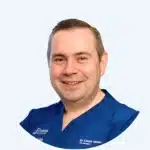
Dr Colum Nolan
Senior Consultant Spine & Neurosurgeon
MB, BCh, BAO, LRCPSI, MRCSI, FRCSI (Neurosurgery)
Keyhole spine surgery has become an increasingly recognised option for treating certain spinal conditions. Smaller incisions, less disruption to surrounding tissues and potentially faster recovery have led many patients to wonder whether it is always the preferred approach.
While minimally invasive techniques offer important advantages in suitable cases, they are not the best option for every patient. Understanding why a more conventional approach may sometimes be recommended can help you have a more informed discussion with your spine surgeon.
When Is Open Spine Surgery Recommended?
The decision to recommend open spine surgery is based on what is needed to treat the condition safely and effectively. When a procedure requires wider access to the spine for structural correction, extensive decompression or reconstruction, an open approach may provide the best opportunity to achieve a successful long-term outcome.
-
Complex Spinal Deformities
Conditions such as severe scoliosis or kyphosis often require the spine to be realigned across multiple levels. An open approach provides the exposure needed to correct the deformity and place stabilising implants with precision.
-
Large Spinal Tumours or Infections
When spinal tumours or infections require surgery, wider surgical access may be necessary to remove or decompress affected tissue while protecting nearby nerves and spinal structures. In some cases, reconstruction or stabilisation of the spine is also required.
-
Multi-Level Spinal Disease
If several areas of the spine require treatment during the same operation, a minimally invasive approach may not always provide adequate access. Depending on the complexity of the procedure, an open approach may allow the surgeon to address multiple spinal levels more effectively.
-
Previous Spine Surgery
Scar tissue from earlier spinal operations can alter the normal anatomy, making keyhole techniques more technically challenging. An open approach may provide better visualisation of important structures, allowing surgery to be performed more safely.
-
Significant Spinal Instability
Severe instability caused by trauma, advanced degeneration or other structural problems may require extensive reconstruction involving several spinal levels. In these situations, open surgery often provides the access needed to restore stability and support the spine effectively.
Does Open Spine Surgery Mean a Longer Recovery?
In general, open spine surgery involves a longer recovery than keyhole techniques. Because it requires a larger incision and greater movement of the surrounding muscles and soft tissues to access the spine, patients may experience more post-operative discomfort and spend longer in hospital.
That said, recovery is influenced by more than the surgical approach alone. The type of procedure performed, the number of spinal levels treated and your overall health all contribute to how quickly you recover. For example, a spinal fusion will typically require a longer recovery than a discectomy, regardless of whether it is performed using an open or minimally invasive technique.
While patients who undergo keyhole spine surgery may return to everyday activities sooner because less healthy tissue is disrupted, the priority is always to choose the approach that provides the safest and most effective treatment.
Can Keyhole Spine Surgery Be Combined with Other Techniques?
Keyhole spine surgery can often be combined with other procedures and technologies to treat more complex spinal conditions while still minimising disruption to the surrounding muscles and soft tissues.
For example, minimally invasive techniques may be used alongside spinal fusion or decompression surgery. Advanced technologies such as computer-assisted navigation and robotic guidance may also be used to improve precision during selected procedures.
However, these combined approaches are not suitable for every patient. Conditions such as severe spinal deformities or those requiring extensive reconstruction may still be better treated with an open procedure, which provides the wider access needed to perform the operation safely.

Finding the Right Surgical Approach with Dr Colum Nolan
Minimally invasive spine surgery can offer important benefits for suitable patients, but it is not always the most appropriate option. Choosing the right surgical approach means looking beyond the size of the incision and focusing on what will treat your spinal condition most safely and effectively.
At Oxford Spine & Neurosurgery Centre in Singapore, every treatment plan is tailored to the individual rather than the procedure itself. Under the care of Dr Colum Nolan, you will receive a thorough assessment and personalised recommendations based on your symptoms, imaging findings and treatment goals.
If you are considering spine surgery or would like a second opinion, arrange a consultation to discuss the treatment approach that best suits your individual condition.
Frequently Asked Questions (FAQs) About Spine Surgery
Does needing open spine surgery mean my condition is more serious?
Not necessarily. Some conditions are simply better treated through an open approach because it provides improved access or visibility. The recommended technique reflects the nature of your condition rather than its severity alone.
Will I need spinal fusion if keyhole surgery is not suitable?
It depends on your diagnosis. Spinal fusion is only recommended if the spine needs to be stabilised. Whether fusion is required is determined by your underlying condition rather than the surgical approach itself.
Does a larger incision increase the risk of complications?
A larger incision does not automatically mean a higher risk of complications. The overall risk is influenced by factors such as the type of procedure, the complexity of your condition and your general health.
Meet Our Spine Specialist in Singapore
Dr Colum Nolan
Senior Consultant Spine & Neurosurgeon
MB, BCh, BAO, LRCPSI, MRCSI, FRCSI (Neurosurgery)
Dr Colum Nolan is a senior consultant spine and neurosurgeon, as well as the Medical Director of Oxford Spine & Neurosurgery Centre. He undertook specialist neurosurgery training in Ireland and Australia, and later on completed a complex spine surgery fellowship at Addenbrooke’s Hospital in Cambridge, UK.
Dr Colum held key leadership roles including Director of the Spine and Spinal Disorders Programme at the National Neuroscience Institute (NNI), as well as the Head of Neurosurgery Service at Sengkang General Hospital.
With his depth of experience, Dr Colum is committed to guiding each patient towards the safest and most effective treatment for their needs.