
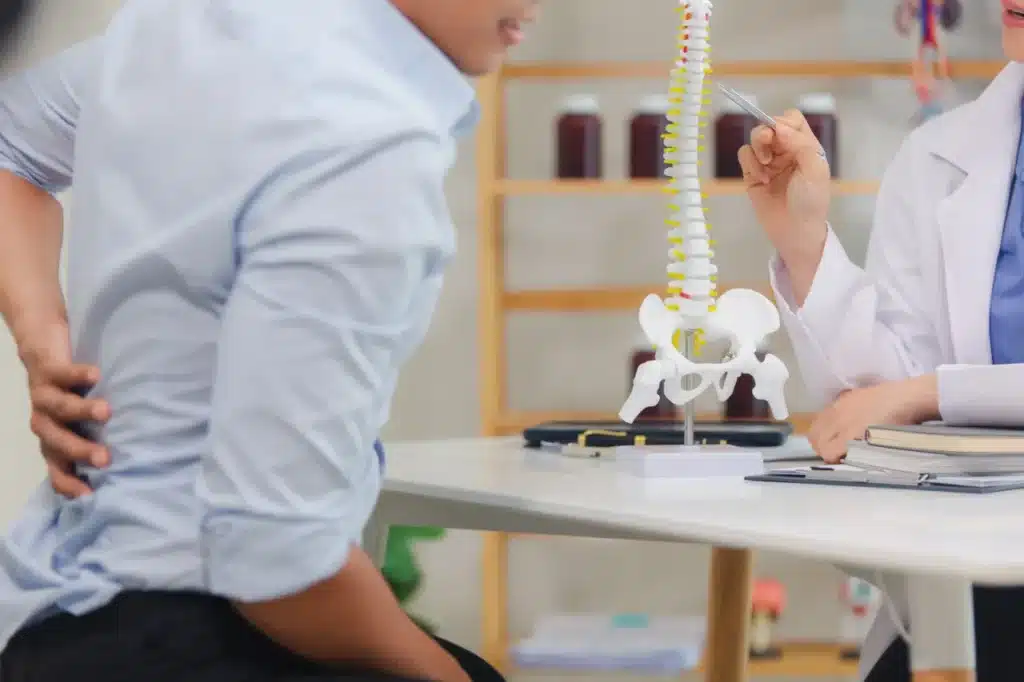

Dr Colum Nolan
Senior Consultant Spine & Neurosurgeon
MB, BCh, BAO, LRCPSI, MRCSI, FRCSI (Neurosurgery)
Two people can have similar slipped disc findings yet experience pain in very different places. One may feel an ache centred in the lower back, while another develops pain that travels through the buttock and into the leg.
The main distinction is whether the slipped disc affects a lumbar nerve root. This depends partly on where the disc material extends in relation to the nerve. This is also why an MRI finding needs to be considered alongside the pattern of your symptoms.
Key Takeaways
- Back-dominant pain does not necessarily involve a compressed or irritated nerve root.
- Leg symptoms may develop when disc material irritates a lumbar nerve root.
- When a nerve root is affected, its location influences where symptoms are felt in the leg.
- MRI findings need to be matched with your symptoms and examination.
Why Does a Slipped Disc Sometimes Cause Mainly Back Pain?
A slipped disc may be associated with pain that remains mainly around the lower back when the disc or surrounding structures are irritated without significant involvement of a lumbar nerve root. Without nerve-root involvement, symptoms are less likely to travel to the leg.
Local Pain Around the Affected Disc
The outer part of a spinal disc contains pain-sensitive nerve endings. When this area is damaged or irritated, it may contribute to pain around the affected part of the lower back.
This pain may become more noticeable when the disc is placed under greater load, such as bending or prolonged sitting.
No Significant Nerve-Root Involvement
Not every herniation extends towards a nerve root. The herniation may project away from a nerve root or leave enough space around it to avoid significant irritation.
In these cases, pain may stay around the lower back rather than travelling into the leg. The size of the herniation alone does not determine where symptoms appear.
Why Can a Slipped Disc Cause Symptoms in the Leg?
Leg symptoms point towards possible nerve involvement rather than simply showing that the slipped disc is more severe. Their location can provide clues about which nerve is affected.
When Disc Material Affects a Nerve Root
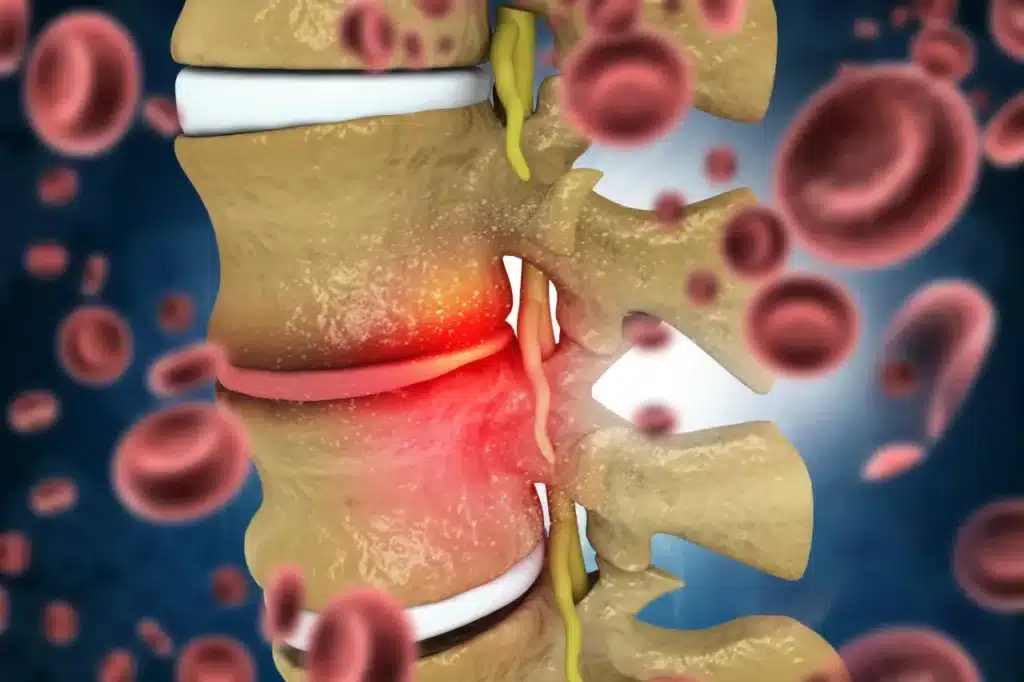
Lumbar nerve roots leave the spine through small openings before continuing into the legs. If disc material extends towards one of these roots, it may apply pressure or reduce the space available around the nerve.
Pressure on a nerve root can cause pain that travels from the back through the buttock and down one leg. If the pressure also disrupts the nerve root’s ability to carry signals, lumbar radiculopathy may develop, causing numbness or weakness in the affected area.
How Inflammation Irritates the Nerve
Direct compression is not the only reason leg symptoms develop. Material from inside the disc can trigger inflammation around a nearby nerve root, making the nerve more sensitive.
This helps explain why noticeable leg pain can occur even when imaging shows limited physical pressure. It also explains why symptoms may improve as inflammation settles, despite part of the herniation remaining visible.
How the Affected Nerve Shapes the Symptoms
Each lumbar nerve root supplies particular areas of the leg and helps control certain muscles. The affected level therefore influences whether symptoms reach the thigh, calf or foot. You may notice numbness or tingling in part of the leg, or weakness that makes movements such as lifting the foot more difficult.
What Does the Symptom Pattern Mean for Treatment?
The location of your symptoms does more than describe where you feel pain. It helps determine what treatment needs to address and whether the slipped disc seen on imaging is likely to be clinically relevant.
Back-Dominant Pain Needs Its Source Confirmed
When pain remains mainly in the back, treatment should not be based on the MRI finding alone. A slipped disc may contribute to the discomfort, but the main source could also involve other structures in the lower back.
Without evidence of nerve-root involvement, treatment aimed specifically at decompressing a nerve may not address the main problem. A comprehensive spine assessment therefore considers your symptoms and the movements that aggravate them alongside the scan.
Leg Symptoms Bring Nerve Function Into Focus
Pain travelling into the leg suggests that a lumbar nerve root may be irritated. Assessment then looks beyond pain intensity to determine whether sensation or muscle strength has changed.
Many people with leg symptoms from a slipped disc improve without surgery. Herniated disc surgery may be considered when symptoms and examination findings match nerve compression on MRI, particularly if symptoms persist despite non-surgical treatment or weakness worsens.
Certain symptoms need more urgent assessment. If back or leg symptoms occur with new difficulty passing urine, loss of bladder or bowel control, or numbness around the genitals or bottom, seek assistance at an emergency department immediately.
Have Your Back and Leg Symptoms Assessed With Dr Colum Nolan
Pain that begins travelling into the leg or is accompanied by changes in strength should be assessed alongside your examination and imaging findings. Establishing whether a nerve root is involved can help determine whether non-surgical treatment remains appropriate or whether other treatment options should be considered.
At Oxford Spine & Neurosurgery Centre, Dr Colum Nolan evaluates slipped discs and related back or leg symptoms in relation to the findings on imaging. Book an appointment to discuss what may be causing your symptoms and which treatment approach may be appropriate for you.
Related Media Features
Read more from Dr Colum Nolan in these media features:
Frequently Asked Questions (FAQs) About Back and Leg Symptoms From a Slipped Disc
Can a slipped disc cause numbness without radiating leg pain?
A slipped disc can sometimes affect the sensory fibres of a nerve without producing prominent radiating pain. However, numbness may also have causes outside the spine. The location and progression of the numbness should be assessed to determine whether the pattern corresponds with a particular lumbar nerve root.
Why do leg symptoms from a slipped disc sometimes come and go?
Leg symptoms may fluctuate when certain positions or activities change the pressure around an irritated nerve root. Inflammation can also vary during recovery. Temporary relief does not necessarily mean the nerve has fully recovered, particularly if numbness or weakness remains.
Can leg symptoms continue after a slipped disc has reduced in size?
A reduction in disc size does not always produce immediate symptom relief. The affected nerve may remain inflamed or sensitive after pressure has decreased, and nerve recovery can take longer than structural changes in the disc. Persistent or worsening symptoms should still be medically assessed.
Meet Our Spine Specialist in Singapore
Dr Colum Nolan
Senior Consultant Spine & Neurosurgeon
MB, BCh, BAO, LRCPSI, MRCSI, FRCSI (Neurosurgery)
Dr Colum Nolan is a senior consultant spine and neurosurgeon, as well as the Medical Director of Oxford Spine & Neurosurgery Centre. He undertook specialist neurosurgery training in Ireland and Australia, and later on completed a complex spine surgery fellowship at Addenbrooke’s Hospital in Cambridge, UK.
Dr Colum held key leadership roles including Director of the Spine and Spinal Disorders Programme at the National Neuroscience Institute (NNI), as well as the Head of Neurosurgery Service at Sengkang General Hospital.
With his depth of experience, Dr Colum is committed to guiding each patient towards the safest and most effective treatment for their needs.