

Dr Colum Nolan
Senior Consultant Spine & Neurosurgeon
MB, BCh, BAO, LRCPSI, MRCSI, FRCSI (Neurosurgery)
Sciatica is a form of nerve pain that can be both debilitating and persistent, with flare-ups lasting anywhere from a few days to several weeks. For individuals who experience recurring episodes, everyday movements and habits may unknowingly aggravate the sciatic nerve, gradually affecting mobility and overall quality of life.
But what causes sciatica flare-ups? Read on to find out what could be triggering your symptoms and how to prevent them from coming back.
What Is Sciatica?
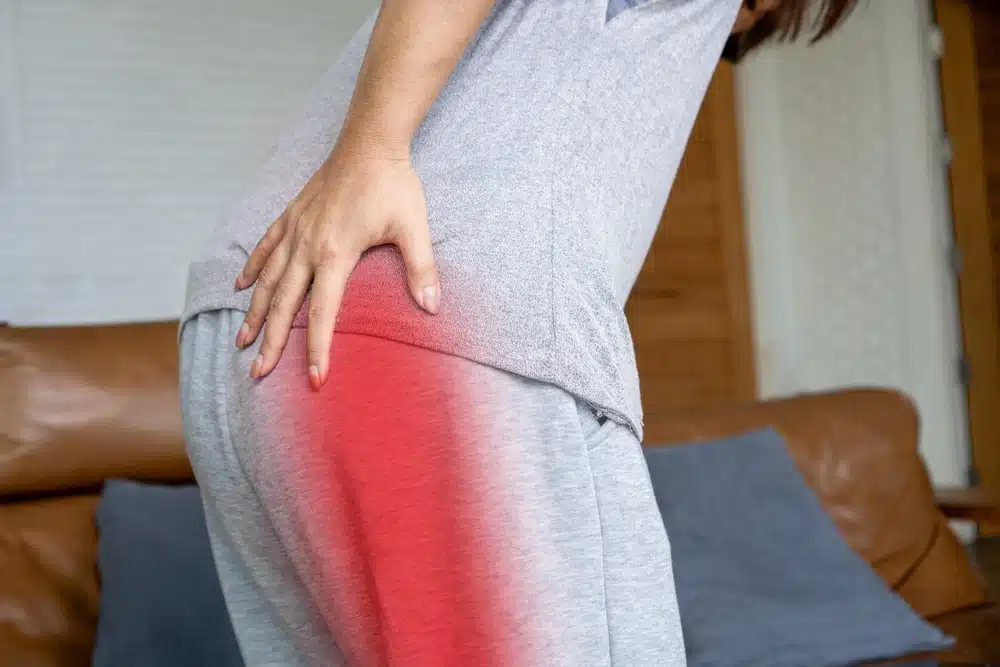
Sciatica refers to pain that travels along the sciatic nerve, which runs from the lower back through the hips and buttocks and down each leg. It usually affects one side of the body and occurs when the nerve becomes compressed or irritated, leading to sharp, shooting pain, tingling, numbness or muscle weakness. Some people describe it as a burning ache or electric shock that may come and go.
Sciatica is not a condition itself but a symptom of an underlying spinal issue. Common causes include:
- Herniated Disc: When the soft centre of a disc pushes through its outer layer and presses on the sciatic nerve.
- Spinal Stenosis: The narrowing of the spinal canal due to ageing changes, such as bone spurs or thickened ligaments, which compress the nerve.
- Degenerative Disc Disease: The natural wear of spinal discs reduces cushioning, causing inflammation and instability that irritates the sciatic nerve.
While episodes can be temporary, recurring flare-ups may happen if the underlying cause is not properly addressed.
Common Triggers of Sciatica Flare-Ups
-
Poor Posture and Prolonged Sitting
Slouching or sitting for extended periods, especially without proper lumbar support, can place undue pressure on the lower back and lumbar discs. This compresses the sciatic nerve, particularly in individuals with pre-existing spinal conditions. -
Heavy Lifting or Sudden Movements
Lifting heavy objects using improper techniques, such as bending at the waist instead of with your knees, can strain your back and lead to a herniated disc. Similarly, sudden, twisting movements can jolt the spine and compress the sciatic nerve. -
Sedentary Lifestyle
A lack of physical activity can weaken the core and back muscles that support your spine. When these muscles are weak, your spine becomes less stable and more susceptible to injuries that can lead to sciatic nerve compression. -
Weight Gain or Obesity
Excess body weight places additional stress on the spine, particularly in the lumbar region where the sciatic nerve originates. This increased load can cause spinal discs to bulge and press against the sciatic nerve, resulting in pain and inflammation. -
Pregnancy
Pregnancy-related weight gain and postural changes can place extra strain on the lower back, increasing pressure on the sciatic nerve. As the foetus grows, the expanding uterus may compress the nerve directly, while hormonal shifts cause ligaments to loosen and joints to become less stable. This combination of factors can lead to spinal misalignment and irritation of the sciatic nerve, resulting in pain that may radiate down the leg. -
Weather Changes
Some individuals report increased sciatica symptoms during cold or humid weather. While the exact mechanism is unclear, changes in atmospheric pressure or temperature may affect joint and muscle stiffness, potentially aggravating nerve irritation.
Preventing Sciatica Flare-Ups
-
Regular Stretching and Exercise
Low-impact exercises that target the back and core muscles can maintain spinal stability and reduce nerve compression. Recommended activities include walking, swimming and specific stretching routines that target the lower back, hips and hamstrings. -
Ergonomic Adjustments
Creating an ergonomic workspace with proper chair support, lumbar cushions and adjustable desks can minimise strain on the spine. At home, using supportive mattresses and avoiding prolonged slouching on soft couches can also help. -
Weight Management
Maintaining a healthy weight through a balanced diet and regular exercise reduces pressure on the spine. Even modest weight loss can alleviate symptoms for individuals with obesity-related sciatica. -
Avoiding Prolonged Sitting or Standing
Both prolonged sitting and standing can contribute to sciatic nerve irritation. When sitting for extended periods, change positions frequently and take regular breaks to move and stretch. Use supportive seating and maintain proper posture to minimise spinal stress. -
Proper Lifting Techniques
When lifting objects, bend your knees and keep your back straight, holding the load close to your body for better support. Avoid twisting or jerking movements while lifting, as these can strain the lower back and irritate the sciatic nerve.
When to Seek Medical Advice
Mild sciatica often improves with rest and conservative care. However, certain symptoms require prompt medical attention to rule out serious underlying issues:
- Persistent or Worsening Pain: If pain lasts more than a few weeks or worsens despite self-care, it may signal a deeper problem that needs medical evaluation.
- Numbness or Weakness: Tingling, numbness or muscle weakness in the leg or foot could indicate significant nerve compression and should be assessed promptly.
- Loss of Bladder or Bowel Control: Sudden incontinence may suggest cauda equina syndrome, a medical emergency requiring immediate treatment.
If you experience recurring sciatica flare-ups, our clinic provides comprehensive assessments and personalised treatment plans to help relieve pain and restore comfort. Schedule a consultation today to explore the most effective treatment options for your condition.
Our Spine Specialist in Singapore
Dr Colum Nolan
Senior Consultant Neurosurgeon
MB, BCh, BAO, LRCPSI, MRCSI, FRCSI (Neurosurgery)
Dr Colum Nolan is a Senior Consultant Neurosurgeon and the Medical Director of Oxford Spine & Neurosurgery Centre. He undertook specialist neurosurgery training in Ireland and Australia, and later on completed a complex spine surgery fellowship at Addenbrooke’s Hospital in Cambridge, UK.
Dr Column held key leadership roles including Director of the Spine and Spinal Disorders Programme at the National Neuroscience Institute (NNI), as well as the Head of Neurosurgery Service at Sengkang General Hospital.
With his depth of experience, Dr Colum is committed to guiding each patient towards the safest and most effective treatment for their needs.