
Dr Colum Nolan
Senior Consultant Spine & Neurosurgeon
MB, BCh, BAO, LRCPSI, MRCSI, FRCSI (Neurosurgery)
Living with a herniated disc can be challenging, especially when pain limits daily activities or affects work. Many people in Singapore have work or training backgrounds, including national service, logistics and office-based roles, that involve manual handling, prolonged sitting or repetitive lifting, which are recognised risk factors for disc-related symptoms.
While most people recover with non-surgical care, there are situations where symptoms persist despite best efforts. Learn when conservative treatment is usually recommended, how to recognise when it may not be enough and what surgical options may be considered.
What Is a Herniated Disc?
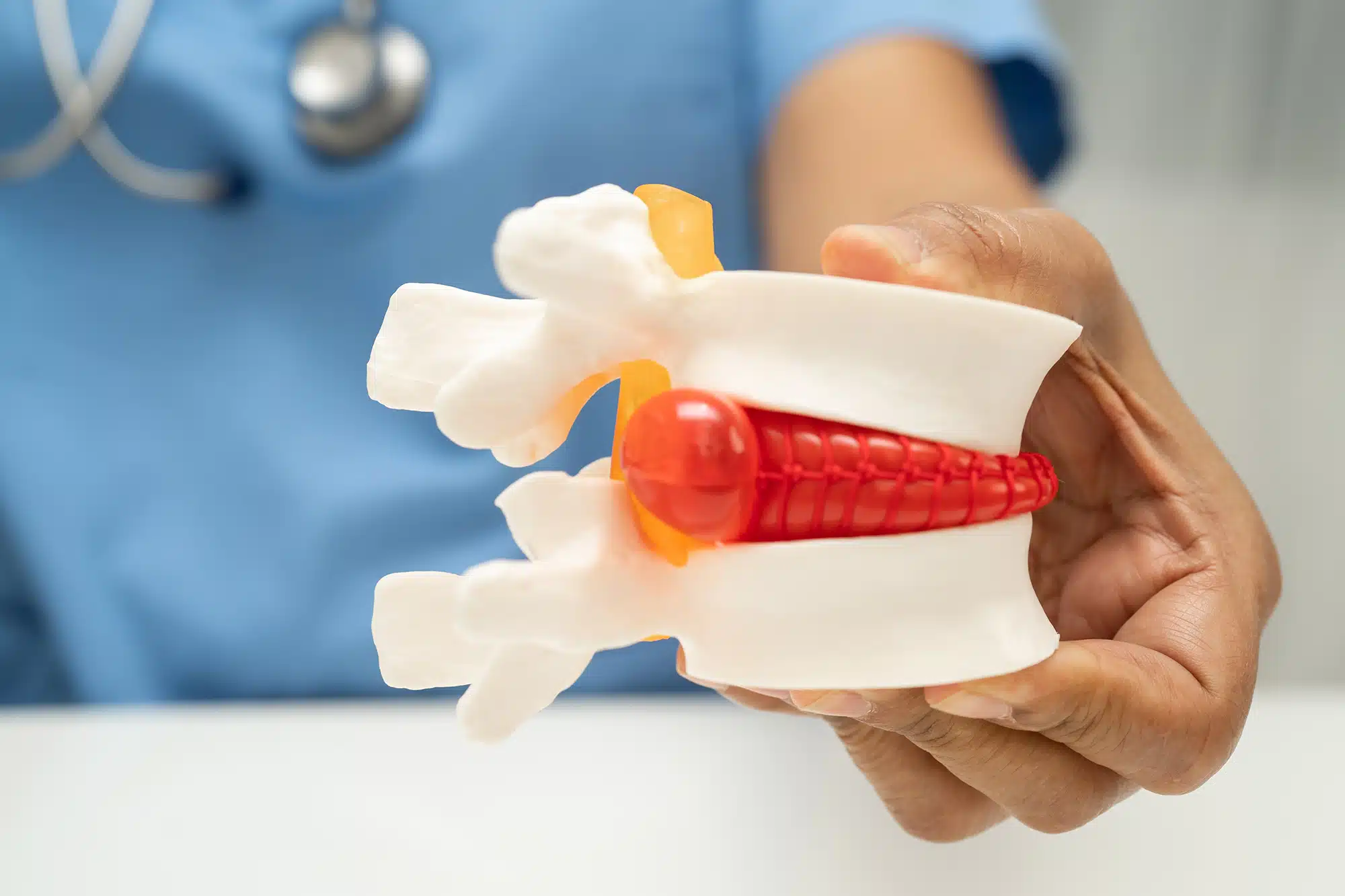
The spine is made up of bones called vertebrae separated by discs that act as cushions. Each disc has a softer inner centre surrounded by a tougher outer layer. A herniated or slipped disc occurs when the inner material pushes through a tear or weakened area in the outer layer. This can irritate nearby nerves, leading to pain, tingling, numbness or weakness.
Herniated discs can occur in the neck (cervical region), mid-back (thoracic region) or lower back (lumbar region), with lumbar herniations being the most common. Symptoms depend on which nerve is affected. For example, a lumbar herniated disc may cause shooting pain down the leg, while a cervical herniated disc may cause pain or weakness in the arm.
When Conservative Treatment Is Recommended First
Initial treatment for a herniated disc is often recommended when symptoms are stable and there are no signs of significant nerve damage. The aim is to reduce inflammation, relieve pain and restore mobility. Many patients notice improvement over two weeks to a few months with the following approaches:
- Medications: Pain relief may involve oral analgesics, anti-inflammatory medications or muscle relaxants. These help manage discomfort so patients can stay active and engage in rehabilitation.
- Physiotherapy: Physiotherapy plays a central role in early management. A structured programme may include strengthening exercises, stretching, posture training and techniques to reduce nerve irritation. Many people improve significantly over several weeks with consistent therapy.
- Activity Modifications: Temporary adjustments at work or home often make symptoms easier to manage. This may include avoiding heavy lifting, limiting repetitive bending or taking short breaks during long periods of sitting. Keeping active within comfortable limits is important, as complete bed rest may delay recovery.
- Image-Guided Injections: For persistent inflammation or nerve pain, image-guided injections such as epidural steroid injections may provide relief. These injections deliver medication directly to the affected area. They do not repair the disc but may improve symptoms enough to support ongoing rehabilitation.
Signs That Conservative Treatment May Not Be Enough
- Ongoing back or neck pain that does not improve after several weeks of treatment
- Persistent nerve pain that radiates into the arm or leg
- Numbness or tingling that interferes with daily tasks
- Muscle weakness, such as difficulty lifting the foot or gripping objects
- Recurring flare-ups that become more frequent or harder to manage
Types of Surgery for Herniated Discs
1. Lumbar Discectomy and Decompression
A lumbar discectomy and decompression is performed to remove the portion of a herniated disc pressing on a nerve and to relieve pressure on the spinal canal. This procedure reduces nerve compression, easing pain, tingling or weakness in the leg. The procedure may be performed using a traditional open approach or a minimally invasive technique. Minimally invasive methods use smaller incisions and specialised instruments to reduce disruption to surrounding muscles and soft tissues, which may support a smoother recovery.2. Cervical Discectomy (With or Without Fusion)
A cervical discectomy is performed when a herniated disc in the neck presses on the spinal cord or nerve roots. The aim is to remove the disc material causing compression, allowing symptoms such as arm pain, numbness or weakness to improve.For herniated discs in the neck, options may include:
-
Anterior Cervical Discectomy and Fusion (ACDF)
This procedure involves removing the damaged disc through a small incision at the front of the neck. A spacer or bone graft is then inserted to maintain disc height and spinal alignment. Plates or screws may be added to stabilise the segment during healing.
-
Cervical Disc Replacement
In selected patients, the removed disc can be replaced with an artificial implant rather than performing a fusion. This option may help preserve motion at the treated level, depending on the individual’s anatomy, symptoms and spinal stability.
3. Spinal Fusion
Spinal Fusion may be considered when there is significant instability or when disc degeneration affects spinal alignment. The procedure joins two or more vertebrae using bone grafts or implants to support stability and relieve pressure on the affected nerves.Explore Suitable Slipped Disc Treatments With Dr Colum Nolan
Living with a herniated disc can be challenging, but many people recover with appropriate non-surgical care. When symptoms persist or worsen, timely assessment helps guide the next steps. Understanding treatment options allows patients to make informed decisions, with surgery considered only when necessary to relieve nerve compression and restore function.
At Oxford Spine and Neurosurgery Centre, care is guided by thorough assessment and evidence-based treatments. Dr Colum Nolan reviews each case individually, taking symptoms, imaging findings and lifestyle factors into account. If your symptoms continue despite initial treatment, schedule a consultation with us to explore management options tailored to your needs.
Our Spine Specialist in Singapore
Dr Colum Nolan
Senior Consultant Neurosurgeon
MB, BCh, BAO, LRCPSI, MRCSI, FRCSI (Neurosurgery)
Dr Colum Nolan is a Senior Consultant Neurosurgeon and the Medical Director of Oxford Spine & Neurosurgery Centre. He undertook specialist neurosurgery training in Ireland and Australia, and later on completed a complex spine surgery fellowship at Addenbrooke’s Hospital in Cambridge, UK.
Dr Column held key leadership roles including Director of the Spine and Spinal Disorders Programme at the National Neuroscience Institute (NNI), as well as the Head of Neurosurgery Service at Sengkang General Hospital.
With his depth of experience, Dr Colum is committed to guiding each patient towards the safest and most effective treatment for their needs.