
Spine Navigation and Robotic Technology in Neurosurgery

An Educational Overview of Image-guided and Technology-assisted Spine Care

A photo of Dr Colum Nolan, Senior Consultant Neurosurgeon of Oxford Spine & Neurosurgery Centre

Dr Colum Nolan
Senior Consultant Spine & Neurosurgeon

MB, BCh, BAO, LRCPSI, MRCSI, FRCSI (Neurosurgery)
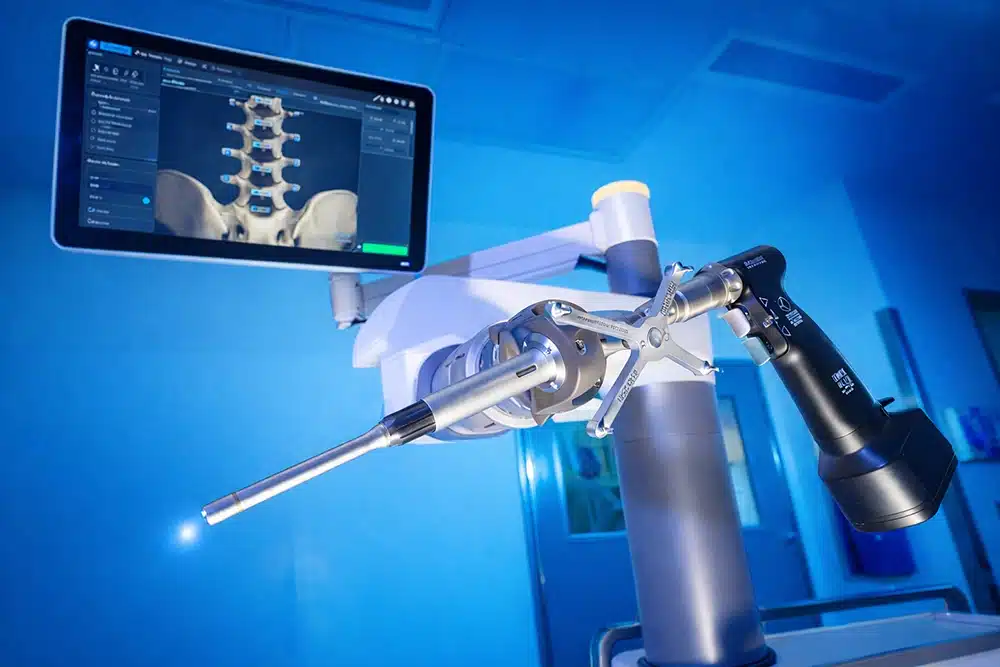
Advances in modern neurosurgical spine surgery have increasingly focused on improving accuracy and safety, particularly when operating near delicate nerve structures. Spine navigation technology and robotic-assisted spine surgery systems are tools developed to support this goal. They are used selectively during procedures such as spinal decompression, spinal stabilisation, and minimally invasive spine surgery, and are applied as part of a carefully planned treatment pathway rather than as a routine solution.


Spine navigation and intraoperative neuroimaging are complementary technologies used in modern neurosurgery, each serving a different purpose during surgery. Spine navigation helps guide surgical instruments with accuracy based on mapped anatomy, while intraoperative neuroimaging provides updated images during the operation to confirm progress and support decision-making. When used appropriately, these technologies work together to support precision, safety, and adaptability during selected spine procedures.


This page explains what spine navigation and robotic technology involve, how they are used in neurosurgery, and how they may support the management of certain spine conditions treated at Oxford Spine and Neurosurgery Centre.

What Spine Navigation Means

Spine navigation refers to computer-assisted, image-guided spine surgery systems that use detailed imaging, such as CT-based or intraoperative scans, to create a three-dimensional map of a patient’s spinal anatomy.


During surgery, navigation systems help the surgeon to:

  • Visualise spinal structures in real time
  • Identify planned pathways for surgical instruments or implants
  • Confirm alignment and positioning during each step

Clinical studies have shown that image-guided spine navigation can improve the accuracy of spinal instrumentation placement compared to conventional techniques, particularly in complex anatomy or minimally invasive spine surgery.

What Robotic Technology Adds to Spine Surgery

Robotic technology in spine surgery works together with navigation systems. It does not perform surgery independently, but assists with preoperative planning and intraoperative guidance.


Robotic-assisted systems may help by:

  • Supporting pre-planned trajectories for screws or instruments
  • Providing stable guidance during spinal fixation
  • Reducing variability in implant positioning

Published medical literature has reported improved consistency in implant placement accuracy when robotic assistance is used, especially in procedures involving spinal stabilisation.

How Navigation and Robotics Are Used Together

In many spine procedures, navigation and robotic systems are integrated. Imaging is used to plan the surgical approach before surgery, and this plan is referenced during the operation using real-time guidance.


Together, these technologies support:

  • Accurate placement of spinal screws or implants
  • Alignment during spinal stabilisation surgery
  • Verification of positioning before final fixation

This approach is particularly useful in minimally invasive spine surgery, where direct visualisation of anatomy may be limited.

Why Accuracy Is Important in Neurosurgical Spine Care

The spine contains critical structures such as the spinal cord and nerve roots. Even small deviations in instrument placement can have important clinical implications.
Improved accuracy in spine surgery has been associated in studies with:
  • Reduced risk of nerve-related complications
  • Lower rates of revision surgery in selected cases
  • Greater consistency during complex or revision spine procedures
Navigation and robotic systems provide additional visual and spatial feedback to support careful surgical execution.

Conditions Where Spine Navigation and Robotic Technology May Be Used

The use of navigation and robotic assistance depends on the condition being treated and the complexity of the surgery. These technologies may be applied in selected cases involving:
  • Spinal stenosis requiring precise nerve decompression
  • Slipped disc or disc herniation, where decompression is performed
  • Degenerative disc disease, which is associated with spinal instability
  • Revision spine surgery where anatomy has changed
Not all spine conditions require navigation or robotic assistance. Suitability is determined through clinical assessment and imaging correlation.

Supporting Minimally Invasive Spine Surgery

Minimally invasive spine surgery aims to achieve effective decompression or stabilisation while limiting disruption to surrounding tissues. Image-guided spine navigation and robotic assistance help surgeons work accurately through smaller access points.
Studies have shown that minimally invasive approaches supported by navigation technology may be associated with:
  • Reduced muscle disruption
  • More predictable implant positioning
  • Lower intraoperative radiation exposure to the surgical team
Patient outcomes vary depending on individual factors and the procedure performed.
Sidebar: Understanding the Difference Between Spine Navigation and Intraoperative Neuroimaging
Spine navigation and intraoperative neuroimaging are often mentioned together, but they support surgery in different ways.
Spine navigation is a guidance system. It creates a detailed map of the spine using imaging, helping surgeons plan and guide instrument placement with accuracy throughout the procedure.
Intraoperative neuroimaging provides updated images during surgery. It allows surgeons to reassess anatomy after key surgical steps and confirm changes before completing the procedure.
In simple terms:
  • Spine navigation helps guide where instruments are placed
  • Intraoperative neuroimaging helps confirm what has been achieved
Both technologies may be used together in selected cases, depending on clinical needs and surgical complexity.

At Oxford Spine and Neurosurgery Centre

The effective use of spine navigation and robotic systems requires dedicated training and experience.


Dr Colum Nolan has undergone dedicated training in spinal navigation techniques and has a clinical interest in the use of image-guided and technology-assisted approaches in spine surgery. Spine navigation technology is utilised where appropriate to support accuracy and consistency during selected procedures.


The decision to use navigation or robotic assistance is always guided by clinical findings, imaging results, and individual patient needs.

Technology as Part of a Broader Spine Care Pathway
While spine navigation and robotic technology support the surgical phase, they form only one part of comprehensive spine care. Treatment planning also involves:

Medical Disclaimer
This page is intended for general educational purposes only and does not constitute medical advice. Information provided is not a substitute for professional medical consultation, diagnosis, or treatment. The use of spine navigation or robotic technology depends on individual clinical assessment and suitability, as determined by a qualified medical practitioner.

Our Spine & Neurosurgeon in Singapore
Dr Colum Nolan
MB, BCh, BAO, LRCPSI, MRCSI, FRCSI (Neurosurgery)

Dr Colum Nolan is a Senior Consultant Neurosurgeon with over 20 years of experience, specialising in minimally invasive spine (keyhole) surgery and other spine procedures. 

A graduate of the Royal College of Surgeons in Ireland, Dr Nolan underwent neurosurgical training in Ireland and Australia, followed by a fellowship in complex spine surgery at Addenbrooke’s Hospital, Cambridge, as well as rotations at the Orthopaedic Spine Unit in Norfolk and Norwich Hospital. 

Dr Colum is committed to delivering compassionate, patient-centred care, combining surgical precision with a genuine dedication to improving his patients’ quality of life.

Get in touch

Make an Enquiry or Request an Appointment

Our friendly team is here to serve you. For urgent enquiries and appointment requests, please call or WhatsApp us directly.

WhatsApp