
Dr Colum Nolan
Senior Consultant Spine & Neurosurgeon
MB, BCh, BAO, LRCPSI, MRCSI, FRCSI (Neurosurgery)
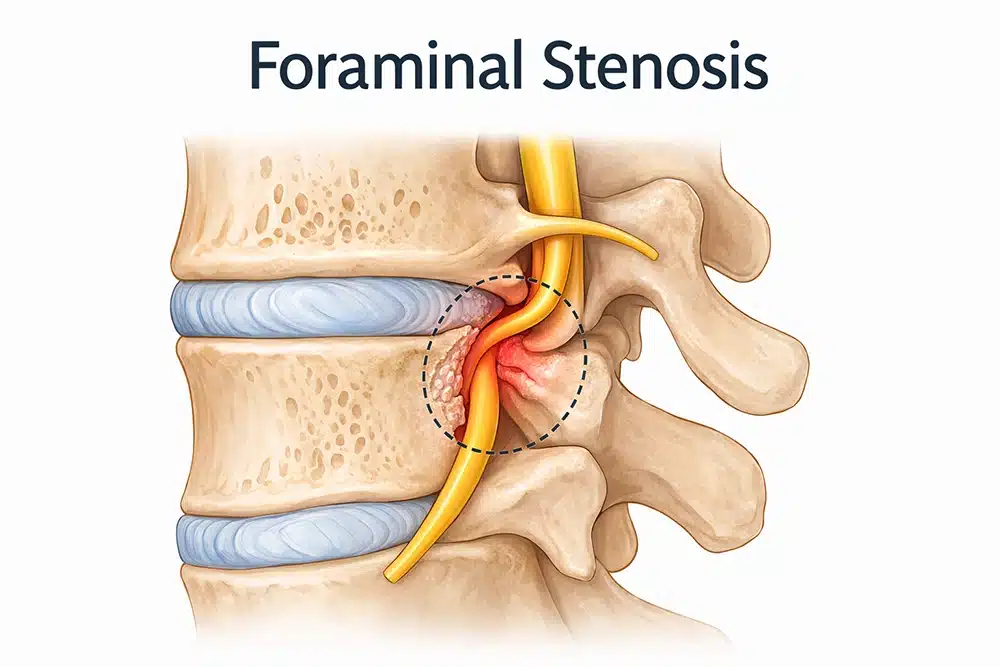
Neck nerve decompression, also known as posterior cervical foraminotomy, is a surgical procedure used to relieve pressure on a cervical nerve root. It is performed from the back of the neck and focuses on creating more space for the affected nerve without removing the disc or fusing the spine.
This procedure may be considered for selected patients with nerve-related arm pain or neurological symptoms that have not improved with non-surgical treatment.
Cervical nerve compression occurs when a nerve exiting the spine becomes irritated or compressed, often due to disc bulging, bone spurs, or degenerative changes around the nerve opening (foramen).
Symptoms may include:
When symptoms correlate with imaging findings and persist despite conservative care, surgical decompression may be discussed.
Posterior cervical foraminotomy is performed under general anaesthesia through a small incision at the back of the neck.
During the procedure:
The goal is to relieve pressure on the nerve while maintaining natural movement of the cervical spine.
Neck nerve decompression is part of a stepwise cervical spine care pathway. Before surgery is considered, patients are usually assessed for:
Surgery is discussed when symptoms persist or neurological function is affected.
Neck nerve decompression procedures at Oxford Spine and Neurosurgery Centre are planned based on detailed clinical assessment and imaging correlation.
Care is led by Dr Colum Nolan, Senior Consultant Neurosurgeon with more than 20 years of clinical experience, with emphasis on appropriate patient selection, motion preservation where suitable, and structured follow up.
Posterior cervical foraminotomy is a surgical option used to relieve cervical nerve root compression while preserving spinal movement. It may be appropriate for selected patients with arm dominant symptoms and stable cervical spine anatomy, forming part of a comprehensive approach to cervical spine care.
Medical Disclaimer
This page is intended for general educational purposes only and does not constitute medical advice. Information provided is not a substitute for professional medical consultation, diagnosis, or treatment. Suitability for posterior cervical foraminotomy must be determined by a qualified medical practitioner following appropriate clinical assessment.
Dr Colum Nolan is a Senior Consultant Neurosurgeon with over 20 years of experience, specialising in minimally invasive spine (keyhole) surgery and other spine procedures.
A graduate of the Royal College of Surgeons in Ireland, Dr Nolan underwent neurosurgical training in Ireland and Australia, followed by a fellowship in complex spine surgery at Addenbrooke’s Hospital, Cambridge, as well as rotations at the Orthopaedic Spine Unit in Norfolk and Norwich Hospital.
Dr Colum is committed to delivering compassionate, patient-centred care, combining surgical precision with a genuine dedication to improving his patients’ quality of life.

Make an Enquiry or Request an Appointment
Our friendly team is here to serve you. For urgent enquiries and appointment requests, please call or WhatsApp us directly.