
Injection-based options to help manage spine-related nerve pain

Dr Colum Nolan
Senior Consultant Spine & Neurosurgeon
MB, BCh, BAO, LRCPSI, MRCSI, FRCSI (Neurosurgery)
Persistent back or neck pain can affect daily activities, sleep, and overall quality of life. When symptoms do not improve with medication, rest, or physiotherapy alone, injection-based treatments may be considered as part of a structured, non-surgical spine care plan.
Epidural injections and nerve blocks are commonly used pain management options that aim to reduce inflammation or interrupt pain signals. While they do not correct the underlying structural cause, they may help ease symptoms, support movement, and guide further treatment decisions.
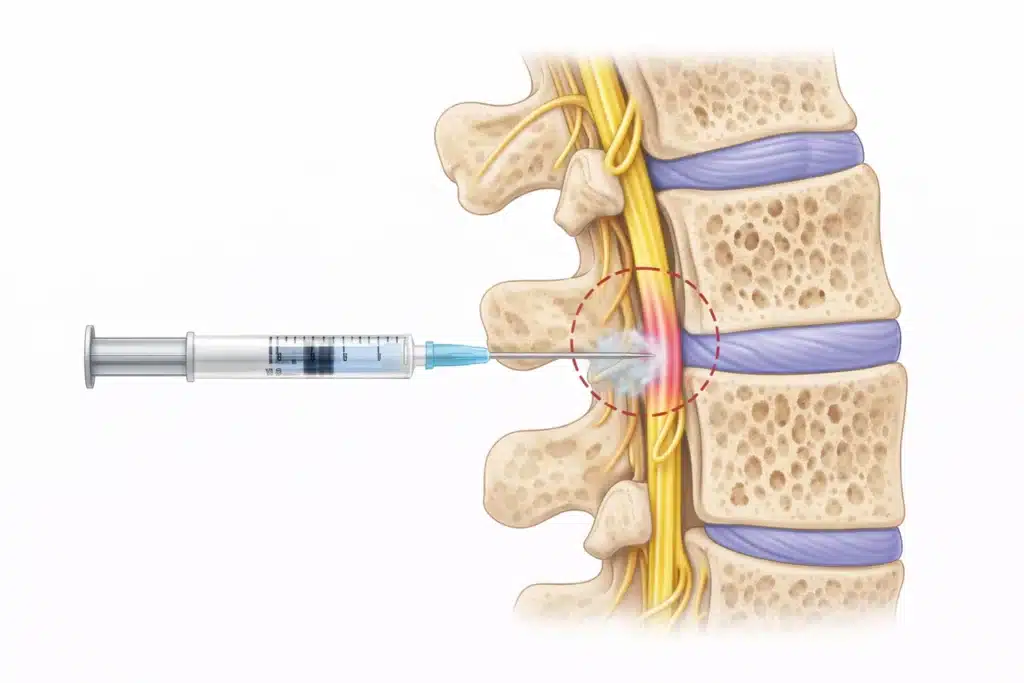
Pain arising from spinal nerves often occurs when nerves are irritated or compressed by surrounding structures such as discs, joints, or thickened ligaments. This can result in:
Injection-based treatments are designed to target pain more directly than oral medication alone, particularly when symptoms persist.
Epidural injections involve delivering medication into the space around the spinal nerves to help reduce inflammation and irritation. The medication commonly includes a steroid to calm inflammation and a local anaesthetic to reduce pain.
By reducing swelling near the affected nerves, epidural injections may help to:
Relief varies between individuals and is usually temporary, lasting from weeks to a few months. These injections are often used to help patients participate more comfortably in physiotherapy or rehabilitation.
Nerve blocks are injections placed close to a specific nerve or nerve root believed to be contributing to pain. Depending on the situation, they may contain local anaesthetic alone or in combination with a small amount of steroid.
Nerve blocks may be used to:
In some cases, nerve blocks are used as a diagnostic step to better understand which nerve is responsible for symptoms.
Although both procedures involve injections near spinal nerves, they serve slightly different purposes in pain management.
The choice between these options depends on symptoms, imaging findings, and how pain affects daily function.
Epidural injections and nerve blocks may be used as part of managing several spine-related conditions, including:
They are generally considered when symptoms persist despite non-invasive treatment and align with clinical assessment.
Both epidural injections and nerve blocks are usually performed as short-day procedures.
After the injection:
Patients are usually advised to avoid strenuous activity for 24 to 48 hours. Follow up is arranged to review responses and adjust the care plan if needed.
When performed by trained specialists, these injections are generally considered safe. As with any medical procedure, risks exist, though serious complications are uncommon.
Possible risks include:
Your doctor will review your medical history and discuss your individual suitability before recommending treatment.
Epidural injections and nerve blocks are typically part of a stepwise pain management approach, rather than standalone treatments.
Depending on the response, further options may include:
At Oxford Spine and Neurosurgery Centre, epidural injections and nerve blocks are used selectively as part of an individualised spine care plan. Treatment decisions are guided by clinical assessment, symptom patterns, and imaging findings rather than imaging alone.
Care is led by Dr Colum Nolan, Senior Consultant Neurosurgeon, with emphasis on careful diagnosis, appropriate sequencing of treatments, and clear communication throughout the care journey.
Epidural injections and nerve blocks are non-surgical options used to help manage spine-related nerve pain. While they do not address the underlying structural cause, they may reduce inflammation, interrupt pain signals, and improve comfort. Used thoughtfully, these injections can support rehabilitation, clarify diagnosis, and help guide the next stage of treatment.
This page is intended for general educational purposes only and does not constitute medical advice. Information provided is not a substitute for professional medical consultation, diagnosis, or treatment. Suitability for epidural injections, nerve blocks, or any spine-related procedure must be determined by a qualified medical practitioner following appropriate clinical assessment.
Dr Colum Nolan is a Senior Consultant Neurosurgeon with over 20 years of experience, specialising in minimally invasive spine (keyhole) surgery and other spine procedures.
A graduate of the Royal College of Surgeons in Ireland, Dr Nolan underwent neurosurgical training in Ireland and Australia, followed by a fellowship in complex spine surgery at Addenbrooke’s Hospital, Cambridge, as well as rotations at the Orthopaedic Spine Unit in Norfolk and Norwich Hospital.
Dr Colum is committed to delivering compassionate, patient-centred care, combining surgical precision with a genuine dedication to improving his patients’ quality of life.

Make an Enquiry or Request an Appointment
Our friendly team is here to serve you. For urgent enquiries and appointment requests, please call or WhatsApp us directly.