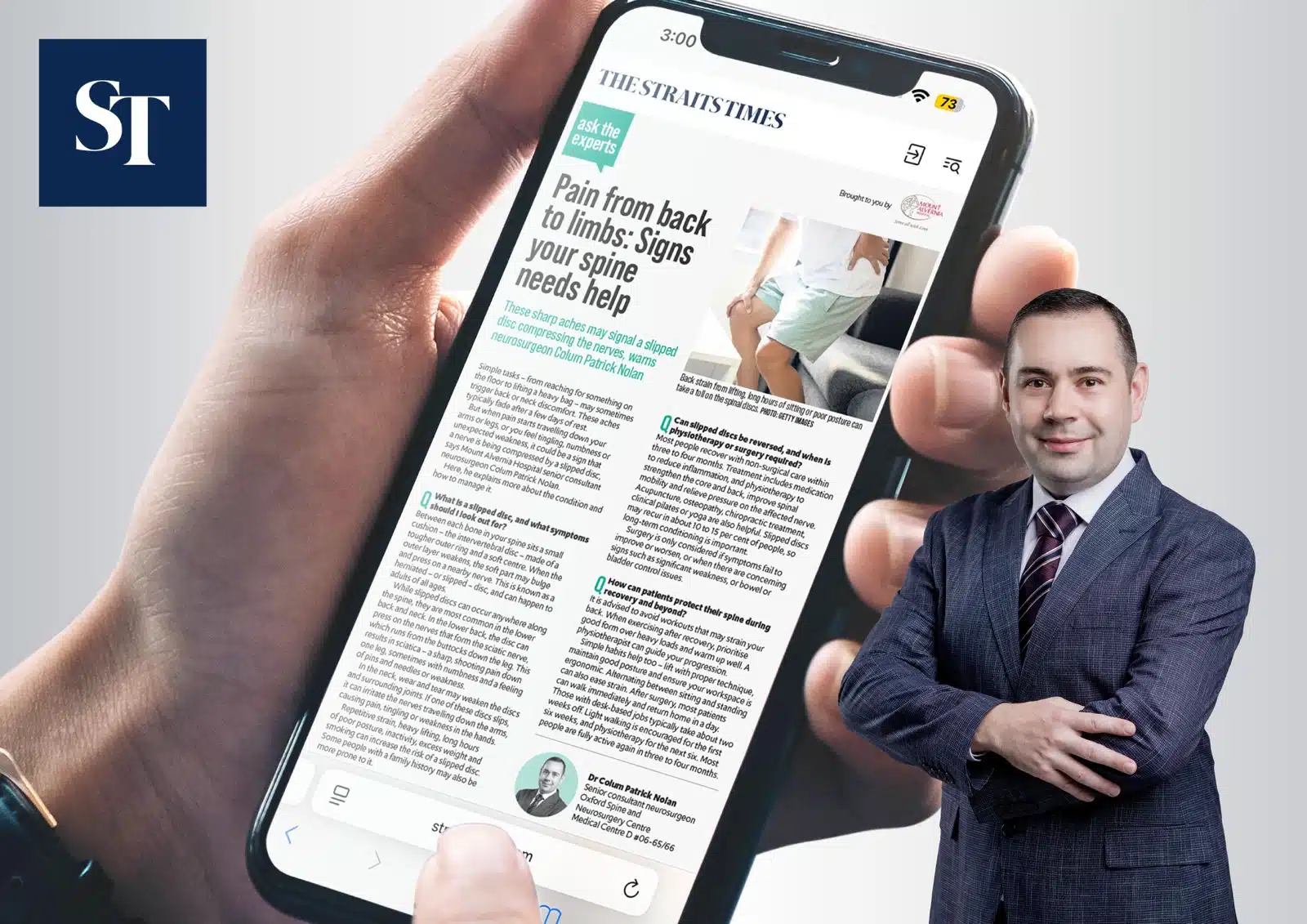

This article is adapted from a feature originally published in The Straits Times and rewritten for educational purposes. The original feature was published with the support of Mount Alvernia Hospital.
Source: The Straits Times (Copyright) SPH Media Limited. Permissions required for reproduction.
Simple daily actions such as bending to pick something up, lifting a heavy bag, or sitting for long hours can sometimes lead to back or neck discomfort. In many cases, these symptoms improve with rest and time. However, when pain begins to travel down the arms or legs, or is accompanied by tingling, numbness, or weakness, it may point to an underlying spinal or nerve related condition that requires closer attention.
One common cause of such symptoms is a slipped disc, also known as a herniated disc.
What Is a Slipped Disc
The spine is made up of bones stacked on top of one another, with cushioning discs in between. These discs act as shock absorbers and allow flexibility during movement. Each disc has a firm outer layer and a softer inner core.
When the outer layer weakens or tears, the inner portion may bulge outward and press on nearby nerves. This nerve compression is what causes pain, numbness, or weakness. Slipped discs most commonly occur in the lower back and neck, where movement and load are greatest.
Common Symptoms to Look Out For
Symptoms vary depending on the location of the affected disc.
In the lower back, nerve irritation may cause pain that travels from the buttock down the leg. This pattern is often referred to as sciatica and may be associated with tingling, numbness, or muscle weakness.
In the neck, a slipped disc can affect nerves supplying the shoulders, arms, and hands, leading to radiating pain, pins and needles, or reduced strength in the upper limbs.
Symptoms that persist, worsen, or interfere with daily activities should not be ignored.
Who Is More Prone to Slipped Discs
- Repetitive strain or heavy lifting
- Poor posture, especially with prolonged sitting
- Sedentary lifestyle with weak core muscles
- Excess body weight
- Smoking
- Age related wear and tear of spinal discs
How Slipped Discs Are Managed
Most individuals with a slipped disc improve with non surgical management. Treatment may include medications to reduce inflammation and pain, along with physiotherapy focused on strengthening supporting muscles, improving posture, and relieving pressure on affected nerves.
A structured rehabilitation plan plays an important role in recovery and in reducing the risk of recurrence.
When Surgery May Be Considered
Surgery is usually considered only when symptoms do not improve with conservative treatment or when there are warning signs such as significant muscle weakness, progressive nerve symptoms, or problems with bladder or bowel control.
Advances in spine care have allowed for more targeted procedures that aim to relieve nerve compression while preserving surrounding structures, which may support faster recovery in suitable patients.
Protecting Your Spine During Recovery and Beyond
Recovery does not end once pain improves. Long-term spine health depends on daily habits and preventive care.
Helpful strategies include maintaining good posture, using proper lifting techniques, ensuring workspaces are ergonomically set up, and alternating between sitting and standing throughout the day. When returning to physical activity, gradual progression and proper technique are key to reducing the risk of reinjury.
When to Seek Medical Attention
Occasional back or neck discomfort is common. However, medical assessment is recommended if pain radiates down the arms or legs, or if symptoms such as numbness, tingling, weakness, or coordination difficulties persist.
Early evaluation allows the underlying cause to be identified and managed appropriately, helping to prevent prolonged nerve irritation and potential complications.
A Practical Takeaway
Pain that travels from the spine to the limbs should not be dismissed. While many disc related conditions improve with appropriate care, recognising warning signs and seeking timely medical advice can make a meaningful difference in recovery and long term spinal health.
If symptoms persist, recur, or begin to affect mobility, strength, or daily activities, it may be helpful to seek a clinical assessment by a spine or neurosurgical specialist. Patients who wish to better understand their condition or explore appropriate management options may reach out to Oxford Spine and Neurosurgery Centre for a professional evaluation and guidance based on individual needs.