

Dr Colum Nolan
Senior Consultant Spine & Neurosurgeon
MB, BCh, BAO, LRCPSI, MRCSI, FRCSI (Neurosurgery)
Certain spinal procedures involve placing implants inside the body to provide structural support where the spine requires additional stability. For patients preparing for surgery, the prospect of having implanted devices in their spine can raise questions about what these devices mean for their recovery and long-term spinal health.
Spinal implants are generally designed to remain in place beyond the initial recovery period. Their role, however, depends on the procedure performed and the condition being treated. In procedures involving spinal fusion, implants may continue providing support while bone grows between the affected vertebrae.
Key Takeaways
- Spinal implants provide mechanical support and stability during recovery from certain spinal procedures, particularly when bone fusion is required.
- The type and configuration of implants depend on the spinal condition being treated and the stability needed after surgery.
- Most spinal implants are intended to remain in place after recovery and do not routinely require removal.
- Implant-related problems such as loosening or breakage may require further evaluation, although additional surgery is not always necessary.
What Types of Spinal Implants Are Used in Surgery?
Spinal instrumentation refers to implants used to reinforce or stabilise specific parts of the spine. Different devices serve distinct mechanical functions and may be combined within the same surgical construct.
| Type of Spinal Implant | Function |
| Pedicle screws | Inserted into vertebrae to provide attachment points for spinal fixation, commonly alongside rods. |
| Spinal rods | Connected to screws or other fixation devices to maintain spinal alignment and limit unwanted movement. |
| Interbody cages | Placed between adjacent vertebrae to maintain disc space height and accommodate bone graft material for fusion. |
Spinal implants may be made from materials such as titanium alloys or medical-grade polymers, depending on their intended function.
How Are Spinal Implants Selected for Surgery?
Implant selection is guided by the surgical procedure and the structural requirements of the affected spinal region. The chosen instrumentation must provide appropriate fixation for the patient’s anatomy and the intended correction or stabilisation.
Several considerations influence the choice of implants:
- Condition and surgical requirements: The nature of the spinal problem and whether surgery involves fusion, deformity correction or stabilisation influence the type of instrumentation required.
- Location and extent of surgery: The spinal levels involved and the number of segments requiring support affect how implants are positioned and connected.
- Bone quality: Reduced bone density may affect how securely screws anchor within the vertebrae, potentially requiring adjustments to the fixation strategy.
Preoperative imaging also helps determine appropriate implant dimensions and placement based on the available bone structures.
How Do Spinal Implants Support the Spine During Recovery?
Following spinal surgery, the operated region needs time to heal before it can withstand normal mechanical demands. Spinal instrumentation provides support during this period in several ways:
- Maintaining spinal alignment: Implants help keep the treated vertebrae in their intended position as the surrounding structures heal.
- Limiting excessive movement: Instrumentation restricts unwanted motion at the operated levels, helping protect the surgical site during the early stages of recovery.
- Supporting bone fusion: In spinal fusion procedures, implants maintain stability while new bone develops between the vertebrae. This process generally takes several months and may continue for a year or longer.
Although implants provide mechanical support, they do not cause bone fusion on their own. Biological healing must still take place, which is why activity restrictions may remain necessary even when the instrumentation is securely positioned. The pace of recovery depends on the procedure performed and how healing progresses.
What Happens to Spinal Implants After Recovery?
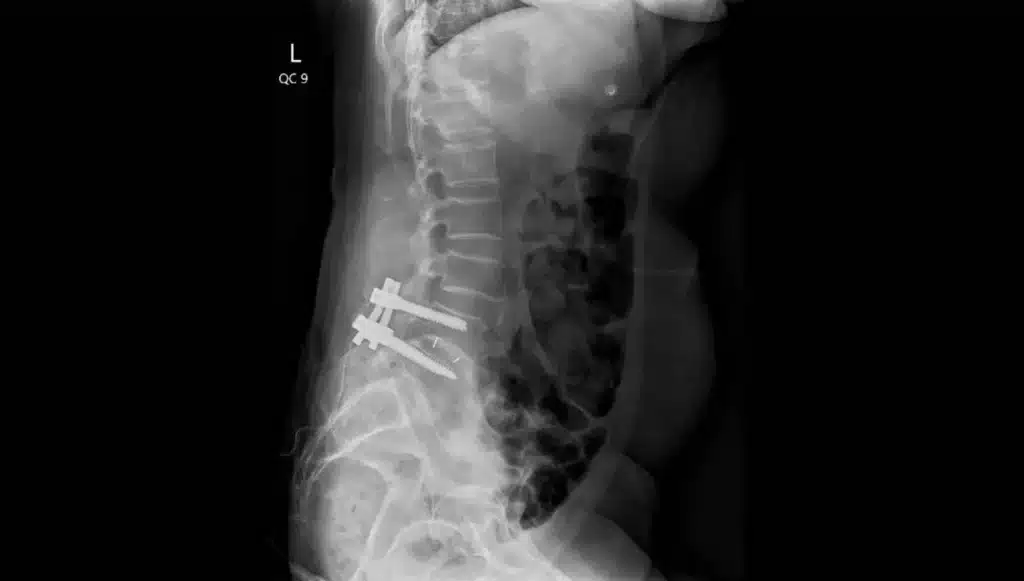
Most spinal implants are designed to remain in the body permanently. Following successful spinal fusion, the fused bone provides stability across the treated vertebrae, reducing reliance on the instrumentation for support.
Once recovery has progressed sufficiently, patients can generally return to everyday activities with their implants in place. The extent of activity that can be resumed depends on the procedure performed and the progress of healing.
Follow-up may involve imaging to assess bone fusion and check the position of the implants. The need for continued monitoring depends on the patient’s recovery and clinical findings.
What Happens if Spinal Implants Develop Problems?
Spinal instrumentation can develop complications, although not every hardware-related problem causes symptoms or requires further surgery. The clinical significance depends on whether the issue affects spinal stability or the healing process.
Possible Spinal Implant Complications
Potential problems involving spinal implants include:
- Implant loosening: Screws may gradually lose their fixation within the bone, potentially causing pain or affecting spinal stability.
- Hardware breakage: Screws or rods may fracture under repeated mechanical stress, particularly if the intended spinal fusion has not healed successfully.
- Implant displacement: An implant may shift from its intended position, potentially irritating nearby tissues or nerve structures.
- Infection: Infection involving spinal instrumentation may develop after surgery and can sometimes require further intervention.
When Is Implant Removal or Revision Necessary?
The need for further surgery depends on the nature of the complication and whether the spine remains adequately supported. Imaging and clinical assessment help establish whether an implant problem is contributing to symptoms or affecting the integrity of the surgical construct.
Implant removal may be considered in selected cases, including persistent pain attributed to the hardware or certain implant-related infections. If the spine remains unstable or fusion has not been achieved, revision surgery may instead involve replacing the instrumentation or adding further fixation.
A broken or loosened implant does not automatically mean that another operation is necessary. The decision depends on the condition of the surrounding spinal structures and the potential consequences of leaving the hardware in place.
Get the Right Support for Your Spine With Dr Colum Nolan
Undergoing spinal surgery can feel daunting, particularly when the procedure involves implants that may remain in your body permanently. Knowing what these devices are intended to do and how they support the healing process can help ease some of that uncertainty. It also provides a clearer picture of what recovery may involve and what to expect when living with spinal implants in the longer term.
At Oxford Spine & Neurosurgery Centre, Dr Colum Nolan draws on his experience in complex spinal surgery to guide patients through decisions involving spinal instrumentation. Where implants are required, their selection is considered alongside the surgical approach and the patient’s spinal condition, with attention given to the expected recovery and long-term outcomes.
If you are considering spine surgery and have questions about the implants involved, arrange a consultation to discuss how the proposed procedure may affect your recovery and life afterwards.
Frequently Asked Questions (FAQs) About How Spinal Implants Support the Spine
Can you feel spinal implants through your skin?
Most spinal implants are positioned beneath layers of muscle and other soft tissues, so they are not usually noticeable through the skin. However, some patients may feel prominent hardware, particularly in areas with less soft tissue coverage. Persistent tenderness or discomfort around the surgical site should be assessed to determine its cause.
Can you have an MRI scan if you have spinal implants?
Spinal implants can sometimes trigger airport metal detectors, depending on their size, material and the sensitivity of the screening equipment. However, many patients pass through security without triggering an alert. Inform security personnel about your implants if additional screening is required.
Can stretching make piriformis syndrome worse?
Yes, many modern spinal implants are considered MR Conditional, meaning MRI can be performed under specified safety conditions. Compatibility depends on the particular device and scanning requirements. Always inform the imaging team about your implants beforehand so that they can verify the relevant safety information.
Will spinal implants permanently limit your flexibility?
Spinal implants do not necessarily cause permanent movement restrictions. However, spinal fusion eliminates movement at the fused vertebral levels, which may reduce flexibility depending on the location and extent of surgery. Many patients can still perform everyday activities, although their overall range of motion may change.
Can spinal implants cause discomfort in cold weather?
Some patients report increased discomfort around previous surgical sites during cold weather, but there is limited evidence that temperature changes directly affect spinal implants inside the body. Cold-related muscle stiffness or other underlying spinal conditions may contribute to these sensations. Persistent or worsening pain should not automatically be attributed to the weather.
Meet Our Doctor
Dr Colum Nolan
Senior Consultant Spine & Neurosurgeon
MB, BCh, BAO, LRCPSI, MRCSI, FRCSI (Neurosurgery)
Dr Colum Nolan is a senior consultant spine and neurosurgeon, as well as the Medical Director of Oxford Spine & Neurosurgery Centre. He undertook specialist neurosurgery training in Ireland and Australia, and later on completed a complex spine surgery fellowship at Addenbrooke’s Hospital in Cambridge, UK.
Dr Colum held key leadership roles including Director of the Spine and Spinal Disorders Programme at the National Neuroscience Institute (NNI), as well as the Head of Neurosurgery Service at Sengkang General Hospital.
With his depth of experience, Dr Colum is committed to guiding each patient towards the safest and most effective treatment for their needs.

