


Dr Colum Nolan
Senior Consultant Spine & Neurosurgeon
MB, BCh, BAO, LRCPSI, MRCSI, FRCSI (Neurosurgery)
Changes in sensation or movement can sometimes indicate a problem affecting the spinal cord. When these symptoms prompt further investigation, one possible finding is a fluid-filled cavity within the spinal cord itself. For some patients, this may already have been identified on an MRI, whereas others may still be undergoing investigations to determine whether it is responsible for their symptoms.
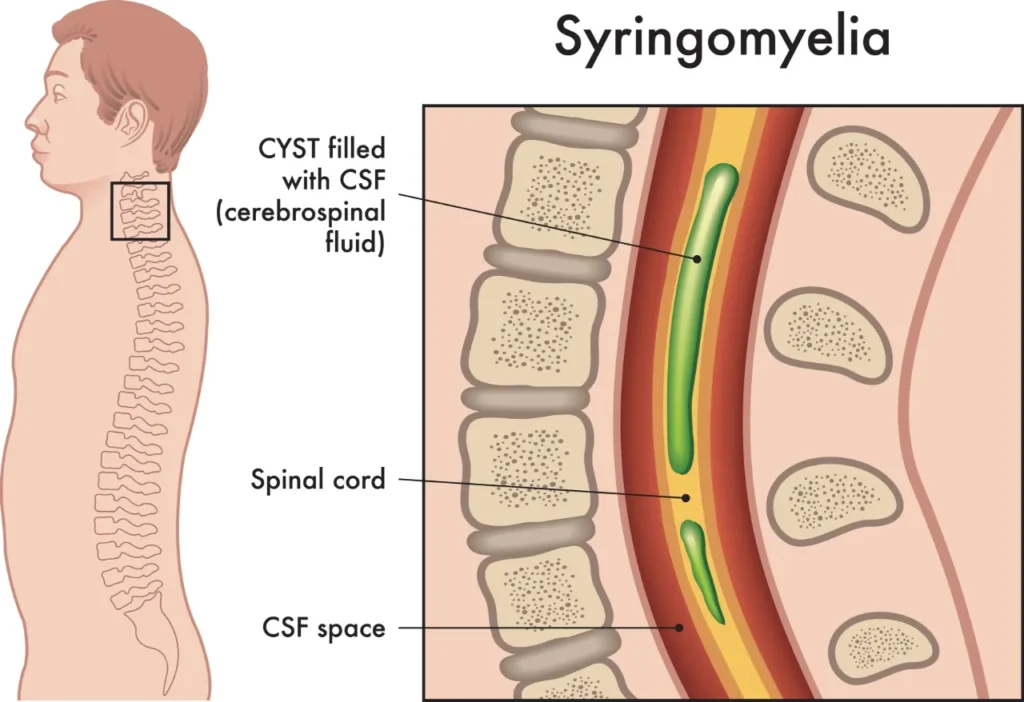
This cavity, known as a syrinx, is associated with a condition called syringomyelia. If the cavity enlarges, it can affect the surrounding spinal cord tissue, potentially interfering with the nerve pathways that carry signals between the brain and body. However, the presence of a syrinx does not necessarily mean that significant damage has occurred. Its clinical significance depends on how the spinal cord is affected and whether neurological function is changing.
How and Why Does Fluid Build Up Inside the Spinal Cord?
The spinal cord is normally surrounded by cerebrospinal fluid (CSF), which circulates through the spaces around the brain and spinal cord. When this circulation is disrupted, changes in fluid pressure and movement may contribute to the formation of a fluid-filled cavity, known as a syrinx, within the spinal cord. However, the exact mechanisms of syrinx formation are not fully understood.
Several conditions are associated with the development of a syrinx:
- Chiari malformation: A structural abnormality at the base of the skull can obstruct normal CSF flow around the junction between the brain and spinal cord, contributing to syrinx formation.
- Spinal cord injury: Trauma can lead to scarring and changes in CSF circulation, sometimes resulting in a syrinx months or years after the original injury.
- Spinal cord tumours or inflammation: These can interfere with CSF flow or alter the surrounding spinal cord structures, creating conditions in which a syrinx may develop.
In some cases, a syrinx develops without an identifiable underlying cause. This is known as idiopathic syringomyelia.
How Does Fluid Build-Up Affect the Spinal Cord?
The spinal cord contains nerve pathways that transmit signals between the brain and different parts of the body. When a syrinx develops, it occupies space within the cord and can stretch or compress surrounding nerve tissue as it enlarges.
The effects depend on which areas of the spinal cord are involved:
- Disruption of sensory pathways: A syrinx near the centre of the spinal cord can affect nerve fibres that carry pain and temperature information as they cross from one side to the other.
- Interference with motor pathways: As the cavity extends into other regions, it may affect nerve cells or pathways responsible for controlling muscle movement.
- Damage to surrounding tissue: Continued expansion can injure nerve cells and fibres within the spinal cord, affecting their ability to transmit signals.
What Neurological Symptoms Can Develop?
Syringomyelia symptoms depend on the location and extent of the syrinx, as different regions of the spinal cord control different functions. Symptoms may develop gradually as the cavity enlarges, although some people experience little or no noticeable neurological impairment.
Possible symptoms include:
- Reduced pain and temperature sensation: Difficulty sensing heat, cold or painful stimuli, sometimes despite retaining the ability to feel touch.
- Muscle weakness: Reduced strength, particularly in the hands or arms when the syrinx affects the cervical spinal cord.
- Changes in reflexes: Reflexes may become reduced or exaggerated, depending on which nerve cells or pathways are affected.
- Difficulty with movement and coordination: Impaired nerve signalling can affect hand dexterity or walking, particularly when motor pathways are involved.
- Pain or abnormal sensations: Some people experience persistent discomfort, burning sensations or tingling in the affected areas.
Can Fluid Build-Up Cause Permanent Spinal Cord Damage?
An enlarging syrinx can cause lasting neurological damage as it stretches or compresses surrounding spinal cord tissue. The risk depends on how the cavity changes over time and which nerve pathways are affected.
Some syrinxes remain stable for years without causing significant impairment. Others may gradually enlarge, leading to worsening neurological function. When nerve tissue has sustained substantial damage, symptoms such as muscle weakness or sensory loss may persist even after treatment reduces the syrinx or addresses its underlying cause.
Changes in neurological function over time can indicate that the syrinx is affecting additional spinal cord tissue, making timely reassessment important.
How Is Fluid Build-Up in the Spinal Cord Diagnosed?
Diagnosing syringomyelia involves confirming the presence of a syrinx and determining whether it corresponds with the patient’s neurological findings.
The evaluation may include:
- Neurological examination: Assessing muscle strength, sensation and reflexes to identify changes that may indicate spinal cord involvement.
- MRI of the spinal cord: Confirming the presence, location and extent of the syrinx, alongside any structural abnormalities that may be contributing to its development.
- Investigation of underlying causes: Additional imaging or investigations may be considered to identify conditions affecting cerebrospinal fluid flow, such as Chiari malformation or spinal cord abnormalities.
Similar neurological symptoms can also arise from cervical myelopathy caused by spinal cord compression. Identifying the underlying condition helps determine whether treatment should address a fluid-filled cavity, spinal cord compression or another cause of neurological dysfunction.
Can the Fluid Be Removed or the Damage Reversed?
Treating syringomyelia does not always require removing the fluid directly. In some cases, addressing the underlying cause can help the syrinx shrink.
Management options may include:
- Monitoring: A syrinx that is not causing significant symptoms or neurological deterioration may be monitored through follow-up examinations and MRI scans.
- Treating the underlying cause: Surgery may be considered to address conditions that disrupt cerebrospinal fluid flow. For example, decompression surgery for Chiari malformation can improve fluid circulation and may reduce the syrinx.
- Direct drainage of the syrinx: In selected cases, a surgical shunt may be used to drain fluid from the cavity. This approach is reserved for selected cases because the shunt may become blocked or require further surgery.
Reducing the syrinx may relieve pressure on surrounding spinal cord tissue and help prevent further neurological deterioration. However, nerve tissue that has already sustained substantial damage may not fully recover, even when treatment successfully reduces the cavity.
Make Informed Decisions About Syringomyelia Care With Dr Colum Nolan
A possible or confirmed diagnosis of syringomyelia can leave you wondering whether your condition will worsen and what medical follow-up may be necessary. Understanding how the syrinx is affecting your spinal cord can help establish whether ongoing monitoring is appropriate or whether changes in neurological function warrant further treatment.
At Oxford Spine & Neurosurgery Centre, Dr Colum Nolan can evaluate changes in the syrinx and neurological function over time, taking into account the underlying cause and findings from previous investigations. Where surgery is being considered, the discussion includes what the procedure may achieve and the limitations of neurological recovery.
Schedule a consultation to clarify your diagnosis and discuss the next steps in your care.
Frequently Asked Questions (FAQs) About Syringomyelia
Can syringomyelia develop years after a spinal injury?
Yes. Post-traumatic syringomyelia can develop months or even years after a spinal cord injury, sometimes following a period of relatively stable neurological function. New or worsening neurological symptoms after a previous spinal cord injury should be assessed, even when the original injury occurred long ago.
Can you exercise if you have syringomyelia?
Yes, many people with syringomyelia can remain physically active. Low-impact activities such as walking may be suitable, provided they do not aggravate neurological symptoms. Heavy lifting or exercises involving significant straining may require modification, particularly if they worsen symptoms. Activity recommendations should reflect the underlying cause and neurological findings.
Can syringomyelia cause headaches?
Headaches can occur in people with syringomyelia, particularly when the condition is associated with Chiari malformation. In these cases, headaches may develop at the back of the head and worsen with coughing or straining due to disrupted cerebrospinal fluid flow. However, headaches are not necessarily caused by the syrinx itself, and their underlying cause requires separate evaluation.
Meet Our Doctor
Dr Colum Nolan
Senior Consultant Spine & Neurosurgeon
MB, BCh, BAO, LRCPSI, MRCSI, FRCSI (Neurosurgery)
Dr Colum Nolan is a senior consultant spine and neurosurgeon, as well as the Medical Director of Oxford Spine & Neurosurgery Centre. He undertook specialist neurosurgery training in Ireland and Australia, and later on completed a complex spine surgery fellowship at Addenbrooke’s Hospital in Cambridge, UK.
Dr Colum held key leadership roles including Director of the Spine and Spinal Disorders Programme at the National Neuroscience Institute (NNI), as well as the Head of Neurosurgery Service at Sengkang General Hospital.
With his depth of experience, Dr Colum is committed to guiding each patient towards the safest and most effective treatment for their needs.

