
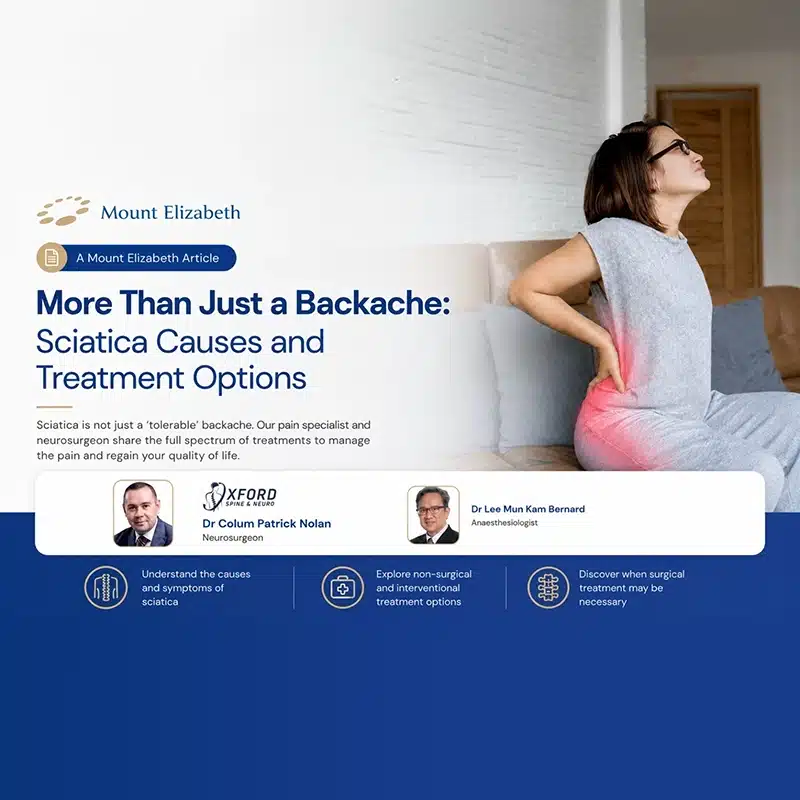

Article Highlight
This article highlights Dr Colum Nolan’s contribution to a feature originally published by Mount Elizabeth Hospitals Health Plus, where he shares insights on back pain, sciatica, and when symptoms may require medical assessment.
Back pain is one of the most common musculoskeletal complaints, affecting people of all ages and lifestyles. While many episodes are related to muscle strain or everyday activities, pain that travels from the lower back down the leg may indicate a different condition known as sciatica.
In a recent Mount Elizabeth Hospitals Health Plus feature, Dr Colum Nolan explains why recognising the difference between general back pain and sciatica is important, as identifying the underlying cause helps guide the most appropriate treatment.
Back Pain and Sciatica Are Different Conditions
Symptoms That May Suggest Sciatica
- Pain travelling from the lower back into the buttock or leg
- Tingling or numbness in the leg or foot
- Burning or electric shock-like pain
- Weakness in the affected leg
- Symptoms that worsen with prolonged sitting, coughing, or sneezing
Most Patients Do Not Need Surgery
When Should You Seek Medical Assessment?
- Pain travelling down one or both legs
- Persistent tingling or numbness
- Weakness affecting the leg or foot
- Difficulty walking
- Symptoms that continue despite rest or conservative treatment
- Changes in bladder or bowel function, which require urgent medical attention
Continue Reading
This article highlights Dr Colum Nolan’s contribution to a feature originally published by Mount Elizabeth Hospitals Health Plus.
For a more detailed discussion on the differences between back pain and sciatica, available treatment options, and when surgery may be considered, read the full feature on the Mount Elizabeth Hospitals website:
Backache or Sciatica? Understanding the Difference and Treatment Options
(Link to full article: https://www.mountelizabeth.com.sg/health-plus/article/backache-sciatica-explained-treatment )