
Dr Colum Nolan
Senior Consultant Spine & Neurosurgeon
MB, BCh, BAO, LRCPSI, MRCSI, FRCSI (Neurosurgery)
Minimally invasive spine surgery at Oxford Spine and Neurosurgery Centre uses small incisions and specialised techniques to treat spinal conditions with less tissue damage, and may result in reduced pain and faster recovery compared with traditional open surgery. It is commonly used for slipped discs, spinal stenosis, and nerve compression.
Minimally invasive spine surgery refers to surgical techniques that aim to address spinal conditions while limiting disruption to surrounding tissues. These approaches may be considered in selected patients, depending on the location of the condition, symptom severity, and overall spine stability.
At Oxford Spine and Neurosurgery Centre, minimally invasive techniques are applied selectively as part of a broader neurosurgical care plan, guided by clinical assessment and imaging findings.

Minimally invasive spine surgery may be supported by advanced technologies where appropriate. These tools assist with planning and precision but do not replace surgical judgement.
Used to support accuracy during selected spine procedures, particularly where precise implant placement or complex anatomy is involved.
A technique used during certain spine surgeries to monitor nerve function in real time, helping to reduce the risk of neurological injury during the procedure.
Minimally invasive spine surgery is not suitable for every condition or every patient. Decisions are based on:
Surgery is typically discussed only after non-surgical options such as medication, physiotherapy, or pain management treatments have been considered.
While minimally invasive spine surgery may be appropriate for selected conditions, it is not suitable for every situation. In cases where spinal cord compression is extensive, spinal instability is present, or deformity requires broader correction, a conventional surgical approach
may be considered.
The choice of surgical method depends on clinical findings, imaging results, and overall spine alignment rather than a preference for one technique over another.
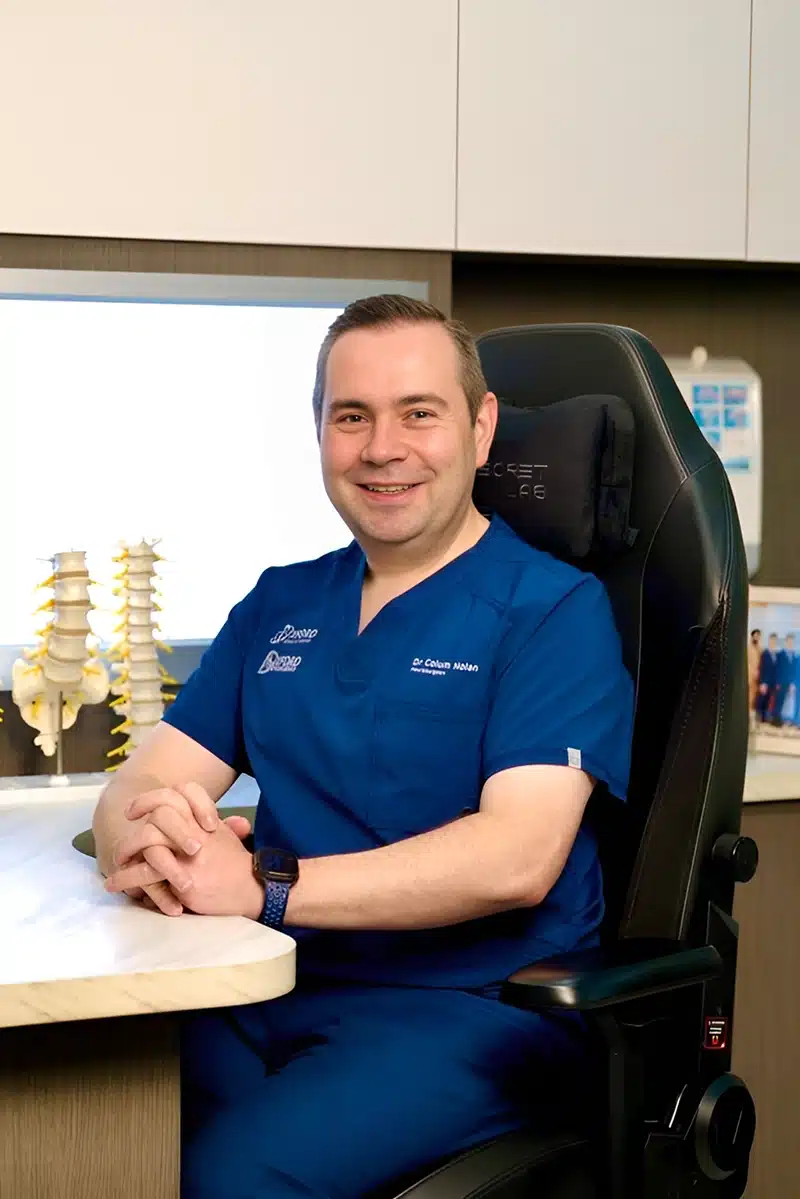
Care at Oxford Spine and Neurosurgery Centre is led by Dr Colum Nolan, Senior Consultant Neurosurgeon with more than 20 years of clinical experience in Neurosurgery. His practice focuses on the assessment and management of complex spine conditions, with the use of minimally invasive techniques where clinically appropriate.
Clear explanation, careful patient selection, and structured follow-up are central to the care approach.
Dr Colum Nolan is a Senior Consultant Neurosurgeon with over 20 years of experience, specialising in minimally invasive spine (keyhole) surgery and other spine procedures.
A graduate of the Royal College of Surgeons in Ireland, Dr Nolan underwent neurosurgical training in Ireland and Australia, followed by a fellowship in complex spine surgery at Addenbrooke’s Hospital, Cambridge, as well as rotations at the Orthopaedic Spine Unit in Norfolk and Norwich Hospital.
Dr Colum is committed to delivering compassionate, patient-centred care, combining surgical precision with a genuine dedication to improving his patients’ quality of life.
Make an Enquiry or Request an Appointment
Our friendly team is here to serve you. For urgent enquiries and appointment requests, please call or WhatsApp us directly.