

Dr Colum Nolan
Senior Consultant Spine & Neurosurgeon
MB, BCh, BAO, LRCPSI, MRCSI, FRCSI (Neurosurgery)
Sciatica causes pain that can range from a mild annoyance to a debilitating condition. While many cases can resolve with conservative treatment, there are some cases where it could be an emergency that requires prompt medical attention. Find out more about what to look out for here in this article.
What Is Sciatica?
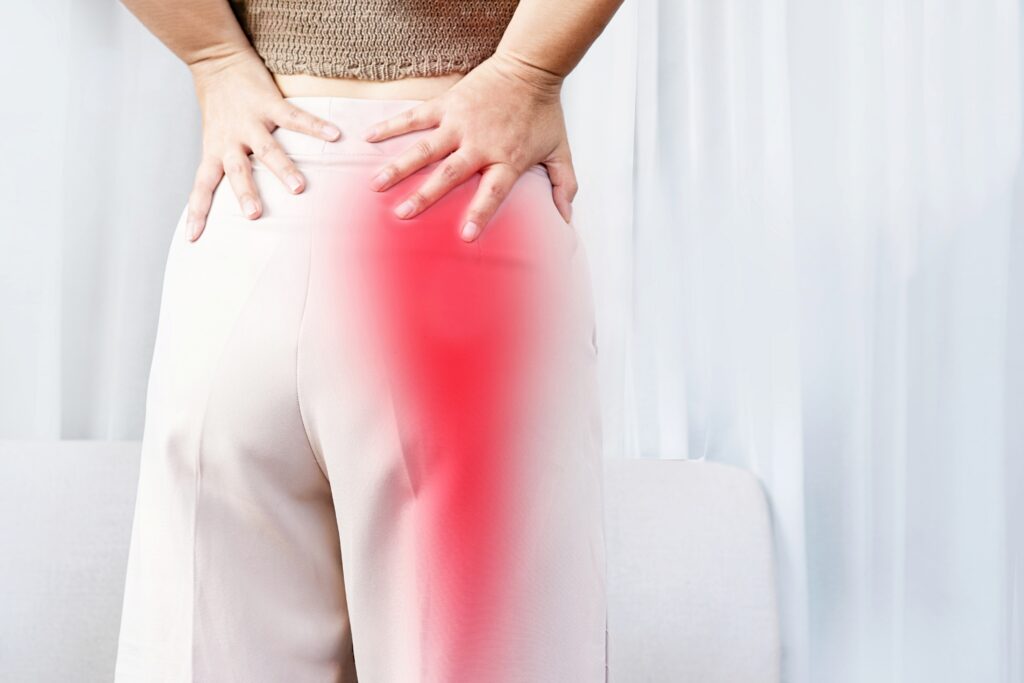
Sciatica describes pain that travels along the sciatic nerve, which runs from the lower back through the hips and buttocks and down each leg. It is not a disease on its own but a symptom of an underlying problem. When the sciatic nerve is compressed or irritated, it can lead to pain, inflammation, tingling or numbness in the affected leg. Common causes include a herniated disc, bone spurs on the spine or spinal stenosis (narrowing of the spinal canal).
When Does Sciatica Become an Emergency?
Sciatica may become an emergency when severe compression affects the bundle of nerves at the base of the spinal cord, a rare but serious condition known as cauda equina syndrome. Key warning signs to look out for include:
Loss of Bladder or Bowel Control
Loss of control over bladder or bowel function is a serious symptom often linked to cauda equina syndrome. This may present as difficulty urinating, inability to hold urine, or involuntary leakage of urine or faeces.
Severe or Worsening Weakness in Legs
While some weakness can accompany typical sciatica, a sudden and progressive loss of strength in one or both legs is a cause for concern. This may manifest as difficulty lifting the front part of the foot (foot drop) or inability to move the leg properly. If you find your leg giving way or you are unable to stand or walk, seek medical attention immediately.
Numbness in the Saddle Area
Numbness or loss of sensation in the saddle area, including the groin, inner thighs or buttocks, can indicate cauda equina syndrome or severe nerve compression. This symptom may be accompanied by a loss of sensation during urination or bowel movements.
Sudden, Severe Pain After Trauma
Sudden, intense sciatica-like pain following an injury, such as a fall, car accident or heavy lifting, may suggest a spinal fracture, disc rupture or other structural damage. Trauma-related pain that is severe or accompanied by other neurological symptoms, such as weakness or numbness, should be evaluated immediately to rule out serious spinal injury.
Fever and Back Pain
If sciatica is accompanied by fever or severe back pain, please seek medical attention. This may indicate a spinal infection that can compress the spinal cord or nerve roots and result in serious neurological damage.
Treatment Options for Serious Cases of Sciatica
When sciatica presents with emergency symptoms, surgery is often required to relieve nerve compression and prevent further complications. The most common procedure for sciatica is a microdiscectomy, where the surgeon removes the portion of the herniated disc that is pressing on the nerve. In cases where the sciatica pain occurs from spinal stenosis or bone spurs, the surgeon may recommend a laminectomy. This procedure involves removing part of the vertebra (lamina) to create more space for the spinal nerves and reduce compression.
Can Sciatica Be Prevented?
While sciatica cannot always be prevented, adopting healthy lifestyle habits can help to lower the risk and severity of flare-ups:
- Maintain Good Posture: Sit, stand and lift with proper alignment to minimise strain on the spine. Use ergonomic chairs and avoid prolonged slouching.
- Exercise Regularly: Strengthen core muscles with activities such as walking, swimming or yoga to support spinal stability.
- Lift Safely: Bend at the knees, keep your back straight and avoid twisting when carrying heavy objects to protect your discs.
- Manage Body Weight: A healthy weight reduces excess pressure on the spine and lowers sciatica risk.
- Limit Prolonged Sitting: Take breaks to stretch or stand during long periods of sitting to relieve pressure on the sciatic nerve.
- Address Symptoms Early: Seek medical advice or physiotherapy for mild symptoms to prevent them from progressing unchecked.
If you experience severe sciatica symptoms, please do not hesitate to reach out to a spine specialist for accurate evaluation and timely treatment.
Our Spine Specialist in Singapore
Dr Colum Nolan
Senior Consultant Neurosurgeon
MB, BCh, BAO, LRCPSI, MRCSI, FRCSI (Neurosurgery)
Dr Colum Nolan is a Senior Consultant Neurosurgeon and the Medical Director of Oxford Spine & Neurosurgery Centre. He undertook specialist neurosurgery training in Ireland and Australia, and later on completed a complex spine surgery fellowship at Addenbrooke’s Hospital in Cambridge, UK.
Dr Column held key leadership roles including Director of the Spine and Spinal Disorders Programme at the National Neuroscience Institute (NNI), as well as the Head of Neurosurgery Service at Sengkang General Hospital.
With his depth of experience, Dr Colum is committed to guiding each patient towards the safest and most effective treatment for their needs.